원자력공학과, ‘원자력 안전규제라운드테이블’ 개최

연구 2026년 05월 30일 토요일

이산화탄소보다 84배 강한 메탄, AI로 더 빠르고 정밀하게 탐지한다!

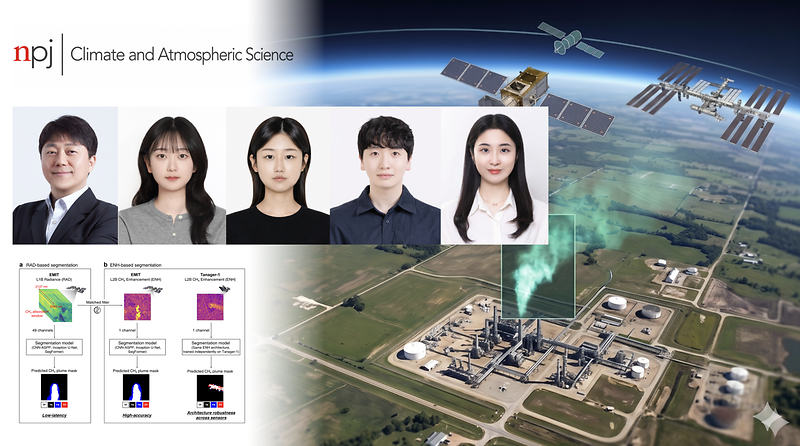
메탄은 배출 뒤 20년 동안은 이산화탄소보다 약 84배 강한 온실효과를 유발한다. 이러한 메탄의 누출을 사람이 일일이 위성영상을 점검하지 않아도 인공지능으로 더 빠르고 정확하게 감시할 수 있는 탐지 기술이 나왔다. UNIST 지구환경도시건설공학과 임정호 교수팀은 초분광 위성 데이터에서 메탄 구름 기둥(플룸)을 자동으로 탐지하는 인공지능 기술을 개발하고, 이를 비교 분석해 감시 목적에 맞는 활용 기준을 제시했다고 25일 밝혔다. 초분광 위성 자료는 지표면에서 반사돼 올라오는 빛을 수십~수백 개의 좁은 파장대로 나눠 관측한 자료다. 연구팀은 NASA 국제우주정거장 관측 초분광 위성 자료인 EMIT 자료를 영상분할 딥러닝 모델에 학습시켜, 위성영상 속에서 메탄 누출 기둥에 해당하는 부분을 자동으로 구분하는 탐지 모델을 만들었다. 메탄은 특정 적외선 파장의 빛을 흡수하기 때문에, 이 파장대의 변화를 보면 메탄이 새어 나와 형성된 기둥을 찾을 수 있다. 개발된 탐지 모델은 세계 여러 지역의 대규모 메탄 배출 사례와 투르크메니스탄, 알제리, 미국 등지의 석유·가스 시설, 폐기물 처리장, 석탄 채굴지 등 다양한 배출원에서 발생한 메탄 기둥을 잘 포착할 수 있었다. 또 설명 가능 인공지능 분석 결과, 탐지 모델은 단순히 영상의 색이나 배경 무늬를 학습한 것이 아니라, 메탄이 빛을 흡수하는 파장대와 누출 기둥의 공간적 형태처럼 실제 메탄의 물리적 특성과 맞는 정보를 활용해 판단하는 것으로 나타났다. 연구팀은 2종류의 데이터를 3종류의 대표적인 영상 분할 딥러닝 모델에 각각 학습시켜 이 같은 자동 탐지 모델을 개발했으며, 각 조합별 탐지 성능도 분석했다. 빛의 세기 데이터인 복사휘도와, 이 데이터를 1차 처리해 메탄 농도 증가 영역을 강화한 자료를 CNN-ASPP, Inception U-Net, SegFormer 모델에 각각 학습시킨 것이다. 각 모델을 비교했을 때 메탄 강화 자료를 학습한 모델들이 전반적으로 더 높은 탐지 정확도를 보였다. 반면 위성이 관측한 복사휘도를 직접 학습한 모델은 정확도는 상대적으로 낮지만, 전처리 과정을 줄일 수 있어 누출 의심 지역을 빠르게 찾아내는 데 유리했다. 또 EMIT 자료에서 확인한 자료·모델 조합을 Tanager-1 자료에도 같은 방식으로 적용해 별도로 학습시켰을 때도 비슷한 탐지 성능을 보였다. 개발된 모델의 확장성을 보여 주는 대목이다. Tanager-1은 민간 위성 기업의 위성을 이용한 초분광 위성자료다. 이번 연구는 양세영·김예진 연구원이 공동 제1저자로 참여했다. 연구팀은 “해상도와 관측 조건이 다른 자료에도 적용할 수 있으며, AI가 어떤 물리적 근거를 바탕으로 메탄을 판별하는지까지 확인할 수 있어 향후 대규모 메탄 누출을 더 빨리 찾아내고 대응하는 차세대 온실가스 감시 기술로 활용될 수 있을 것”이라고 설명했다. 임정호 교수는 “메탄은 어디서 얼마나 새는지를 빠르게 확인하는 것만으로도 감축 효과를 높일 수 있는 온실가스지만, 기존에는 자료 처리와 전문가 검토에 시간이 걸리는 한계가 있었다”며 “이번 연구는 초분광 위성자료와 인공지능을 활용해 누출 의심 지역을 빠르게 선별하고, 필요한 경우 정밀하게 확인할 수 있는 분석 기준을 제시했다는 점에서 국제 사회의 메탄 감축 노력과 배출 검증 체계 강화에 도움이 될 것으로 기대한다”고 말했다. 본 연구는 환경부, 교육부의 지원을 받아 수행되었으며, 연구 결과는 국제 학술지인 npj 기후와 대기과학(npj Climate and Atmospheric Science)에 게재됐다.

원자력공학과, ‘원자력 안전규제라운드테이블’ 개최

연구 2026년 04월 16일 목요일

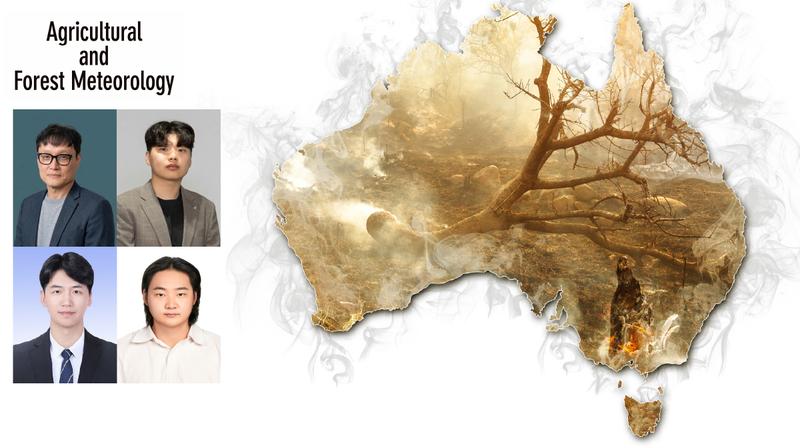
‘엘니뇨’ 밀리고 ‘남극 진동’ 뜨니 호주 산불 더 극심해졌다 !

호주 남동부 지역의 산불 위험이 매년 극단적으로 널뛰는 예측 불허 국면에 진입했다는 분석 결과가 나왔다. 변동성이 커진 원인으로는 ‘남극환상모드’라는 대기 순환 패턴의 영향력 강화가 지목됐다. 지구환경도시건설공학과 이명인 교수팀은 1981년부터 2022년까지 호주 남동부 지역의 산불 기상 조건을 분석해 이 같은 사실을 밝혀냈다. 이 교수팀의 연구에 따르면, 호주 남동부의 산불 위험이 2000년대 초반을 기점으로 ‘체제 전환(Regime Shift)’이라 부를 만큼 급격하고 불규칙한 변화를 겪고 있다. 이전 시기(1981~2001년)에 비해 최근 20여 년(2002~2022년) 사이 극심한 산불 발생 위험일(Fire Weather Days)은 약 5배나 급증했으며, 해마다 산불의 강도가 널뛰는 ‘변동성’ 또한 2배 이상 확대됐다. 주목할 점은 산불을 일으키는 ‘지휘자’가 바뀌었다는 것이다. 과거에는 적도 태평양 수온이 변하는 ‘엘니뇨-남방진동(ENSO)’이 호주 산불에 큰 영향을 미쳤으나, 최근에는 남극을 감싸고 도는 대기 순환 패턴인 ‘남극환상모드(SAM)’가 산불 변동성을 결정짓는 가장 강력한 원인으로 부상했다. 이러한 주도권의 변화는 땅과 대기가 서로 영향을 주고받는 ‘지면-대기 결합’이 강화되었기 때문이라는 분석이다. 가뭄으로 인해 지면이 바짝 마르면, 지면이 수분을 어느 정도 머금고 있던 상태보다 태양열이 지표면 온도를 더 급격히 높이고, 이는 다시 대기를 건조하게 만들어 산불이 나기 쉬운 ‘복합 극한 기상(고온, 건조, 가뭄)’을 유도하는 악순환이 깊어진 것이다. 기후 변화는 농업 분야에도 직접적인 타격을 주고 있는 것으로 나타났다. 연구팀은 산불 위험의 변동성이 커질수록 이 지역의 주요 작물인 옥수수 수확량 또한 비례해 크게 변동하는 현상을 확인했다. 기후-산불-농업을 통합한 사회·경제적 재난 관리의 중요성을 보여주는 대목이다. 제1저자인 김기욱 연구원은 “과거에는 산불 예측 시 엘니뇨 현상을 주로 참고했다면, 이제는 남극 지역의 대기 흐름(SAM)과 지면의 건조 상태를 더욱 면밀히 관찰해야 한다”며 “이번 연구는 호주뿐 아니라 기후 변화로 인해 산불이 대형화·일상화되고 있는 전 세계 여러 지역의 산불 예측 성능을 높이는 데 기여할 것”이라고 설명했다. 이명인 교수는 “단순한 기온 상승을 넘어 기상 요인들의 복합적인 상호작용으로 인해 산불의 예측 불가능성이 커지고 있다”며 “강화된 복합 극한 기상 재난의 신호를 기후 모델에 정교하게 반영한다면 미래 기후 재난에 대비한 영향 예보 시스템을 한 단계 고도화할 수 있을 것”이라고 밝혔다. 이번 연구는 UNIST 이명인 교수팀의 주도로 하와이대학교(University of Hawaii), POSTECH 등 국제 공동 연구팀이 참여했으며, 연구 결과는 산림 및 농업 연구 관련 최상위 국제 학술지 ‘농림기상학(Agricultural and Forest Meteorology)’에 4월 11일자로 게재됐다. 연구 수행은 환경부의 ‘신기후체제 대응 환경기술개발’ 사업의 지원을 받아 이뤄졌다.

원자력공학과, ‘원자력 안전규제라운드테이블’ 개최

연구 2026년 04월 13일 월요일

“한국인, 연간 보름은 대기오염 ‘4중고’에 시달린다”

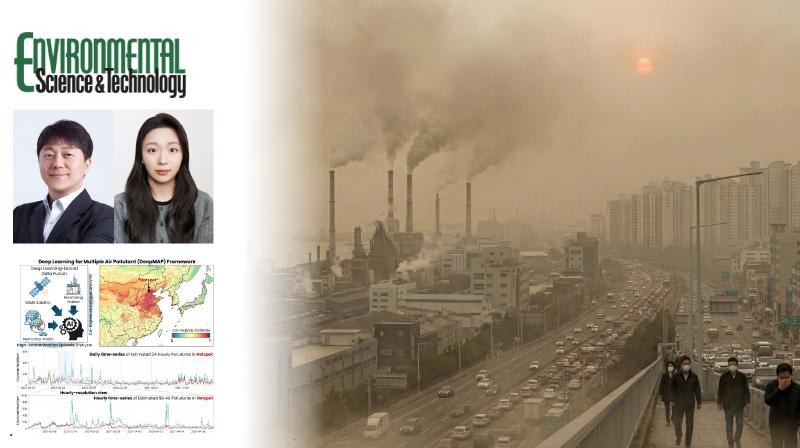
한국인들은 연간 보름가량 세계보건기구(WHO) 권고 기준을 초과하는 미세먼지와 오존 등 4대 대기오염 물질에 동시 노출되는 것으로 나타났다. UNIST 지구환경도시건설공학과 임정호 교수팀은 주요 대기오염 물질 6종의 지표면 농도를 시간단위로 추정해 오염지도를 그리는 인공지능모델인 딥맵을 개발하고, 이 같은 분석 결과를 얻었다고 30일 밝혔다. 연구팀이 이 모델로 2021년부터 2023년까지 동아시아 전역의 대기질을 분석한 결과, 여러 오염물질이 동시에 세계보건기구(WHO) 단기 권고 기준을 초과하는 '공노출' 현상이 광범위하게 발생하고 있었다. 특히 호흡기와 심혈관계 질환을 악화시키는 미세먼지(PM10), 초미세먼지(PM2.5), 이산화질소(NO2), 오존(O3) 등 4개 물질이 한꺼번에 기준치를 초과하는 날이 한국에서만 연간 15일에 달했다. 이러한 대기오염 4중고는 중국 화북평원(24일)과 동부 지역(19일)에서도 두드러졌으며, 주로 겨울철 난방 여파와 봄철 황사, 가을철 고기압 영향으로 오존 생성이 활발한 3월, 4월, 10월에 집중적으로 발생했다. 최근 연구에 따르면, 이러한 복합 노출은 단일 오염물질 노출보다 건강에 더 치명적인 영향을 미칠 수 있어 정밀한 모니터링이 필요하다. 하지만 기존 관측 방식에는 한계가 있었다. 지상 관측소는 산발적으로 흩어져 있어 공간적 공백이 생기고, 위성 관측은 구름에 가려지면 데이터를 얻지 못한다. 대기화학수송모델 역시 해상도가 낮아 지역별 세밀한 변동성을 짚어내기 어려웠으며, 무엇보다 기존 연구 대다수가 오염물질 농도를 하나씩 따로 산출해 실제 복합 오염 상황을 제대로 반영하지 못했다. 반면 분석에 사용된 딥맵은 정지궤도 환경위성(GEMS) 데이터, 대기화학수송모델, 수치모델의 기상자료, 지상관측 자료 등을 통합해 일산화탄소(CO), 이산화황(SO2)을 포함하는 총 6종 대기오염물질의 농도를 시간 단위로 동시에 산출할 수 있다. 공간해상도도 10km로 촘촘해 지역별 오염 분포를 제대로 파악할 수 있으며, 시간 단위 예측으로 오염물질 변화 흐름까지 추적할 수 있다. 제1저자인 강은진 연구원은 “서로 영향을 주고받는 오염물질 간 관계를 함께 학습하는 멀티태스킹 구조를 적용해 기존 단일 오염물질 농도 추정 모델보다 성능이 향상됐다”고 설명했다. 임정호 교수는 “기존에는 대기오염을 개별 물질 중심으로 분석해 실제 환경에서 여러 오염물질이 동시에 작용하는 상황을 충분히 반영하지 못했다”며 “이번 모델은 이러한 한계를 넘어 복합 대기오염을 보다 현실적으로 평가할 수 있게 한 것으로, 향후 대기질 예보와 환경 정책 수립, 공중보건 연구 등 다양한 분야에 활용될 수 있다”고 강조했다. 이번 연구 결과는 환경 분야 저명 학술지인 환경과학과 기술(Environmental Science & Technology)에 3월 20일자로 게재됐다. 연구 수행은 환경부 국립환경과학원, 과학기술정보통신부 한국연구재단의 지원을 받아 이뤄졌다. (끝).

원자력공학과, ‘원자력 안전규제라운드테이블’ 개최

연구 2026년 04월 10일 금요일

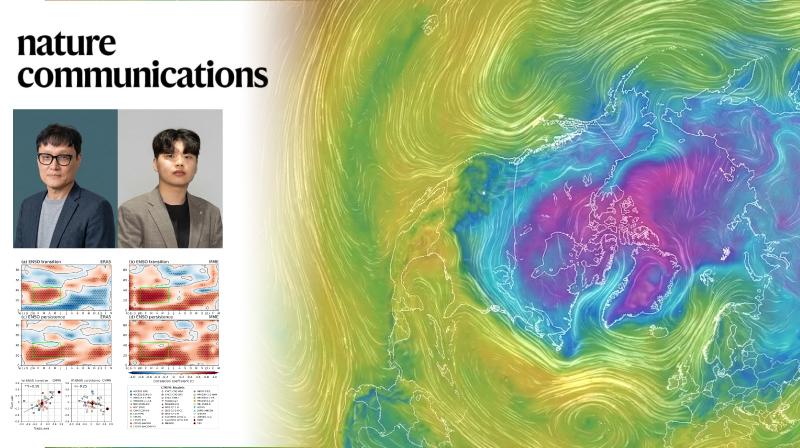
“적도 태평양 수온 뒤바뀌면 이듬해 겨울 추위 예측 더 정확해진다”

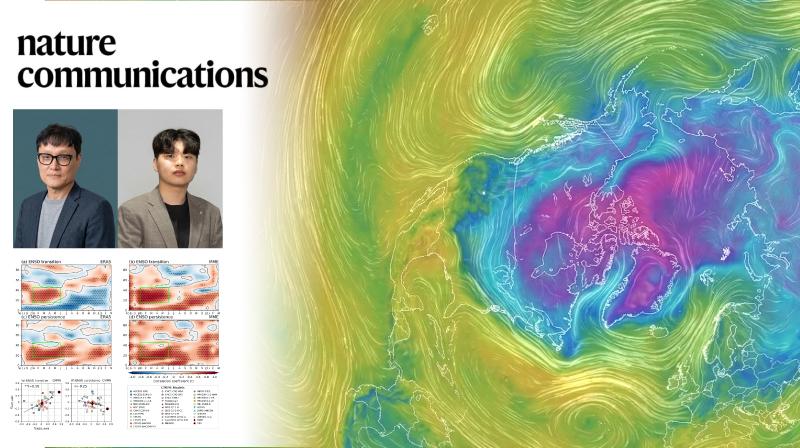
적도 태평양의 해수 온도가 크게 바뀌는 해에는 이듬해 겨울 추위 예측이 더 정확해질 수 있다는 연구 결과가 나왔다. UNIST 지구환경도시건설공학과 이명인 교수팀은 영국 기상청 해들리센터와의 공동 연구를 통해 엘니뇨와 라니냐가 서로 전환되는 시기에 겨울 날씨를 좌우하는 북대서양진동(NAO)의 예측 정확도가 크게 높아지는 현상을 규명했다고 26일 밝혔다. 북대서양진동은 북극의 찬 공기를 가두는 제트기류의 강도를 좌우하는 대기 순환 패턴이다. 북반구 한파와 폭설에 큰 영향을 미치지만 해마다 변동 폭이 커 한 달 뒤 상황조차 예측하기 어렵다. 연구에 따르면, 엘니뇨에서 라니냐로, 또는 라니냐에서 엘니뇨로 바뀌는 해에는 다음 해 겨울 기후 모델의 북대서양진동 예측 성능을 나타내는 상관계수가 0.60까지 높아지는 것으로 나타났다. 반면 엘니뇨나 라니냐 상태가 계속 유지되는 해에는 상관계수가 0.03 수준에 머물렀다. 엘니뇨는 적도 태평양의 해수면 온도가 평년보다 높아지는 현상이고, 라니냐는 반대로 해수면 온도가 낮아지는 현상이다. 연구진은 해수 온도 변화로 시작된 강한 대기 변화가 북쪽으로 서서히 전달되면서 북대서양진동에 영향을 주기 때문에 모델의 예측 정확도가 높아지는 것으로 분석했다. 해수 온도 변화로 유발된 대기 각운동량이 약 1년 뒤 북반구 대기 순환에 영향을 주는 ‘지연 효과’와, 로스비 파동을 통해 대기 신호가 바로 전달되는 ‘동시 효과’가 겹치면서 북대서양진동 패턴이 강화되는 것이다. 로스비 파동은 지구 자전의 영향으로 대기 흐름이 물결처럼 굽이치며 이동하는 현상이다. 제1저자인 김기욱 연구원은 “평소 겨울 대기는 여러 자연 변동이 뒤섞여 있어 신호보다 잡음이 더 큰 상황이지만, 엘니뇨와 라니냐가 서로 뒤바뀌는 시기에는 열대에서 시작된 변화가 신호를 구조적으로 강화하기 때문에 역학적 시그널이 강해져 1년 후 예측 성능을 증가시키는 원리”라고 설명했다. 연구팀이 제시한 이론은 최근 북반구 겨울 기후 사례와도 잘 맞아떨어진다. 재작년 겨울(2024년~2025년)은 직전 해 엘니뇨에서 라니냐로 전환된 시기로, 기후예측 모델들이 북대서양진동(북극진동)을 비교적 정확하게 예측한 사례로 꼽힌다. 반면 지난겨울(2025년~2026년)은 라니냐 상태가 계속 유지되면서 이러한 전환 신호가 나타나지 않았고, 북극 상공 성층권 온난화 등 다른 요인이 작용하면서 한파 예측이 쉽지 않았던 것으로 풀이된다. 이명인 교수는 “적도 태평양에서는 해마다 해수 온도와 대기 순환이 함께 바뀌는 엘니뇨 남방진동(ENSO) 현상이 나타나는데, 이러한 변화가 1년 뒤 북반구 대기 순환으로 이어지는 과정을 역학적으로 규명한 것”이라고 설명했다. 이 교수는 이어 “겨울 기후 변동성을 고려한 장기적 농업 생산이나 에너지 수요 관리 대응 전략과 향후 개발될 한국형 기후예측모델의 정확도를 높이는 데 기여할 수 있을 것”이라고 말했다. 이번 연구 결과는 세계적 권위지 네이처(Nature)의 자매지인 네이처 커뮤니케이션즈(Nature Communications)에 3월 25일(런던 현지 시각) 공개됐다. 연구 수행은 기상청과 국립기상과학원의 ‘기후예측 현업시스템 운영 및 개발’과 ‘기후위기 대응 국가기후예측시스템 개발’ 사업의 지원을 받아 이뤄졌다.

원자력공학과, ‘원자력 안전규제라운드테이블’ 개최

커뮤니티 2026년 03월 02일 월요일

“AI로 원전·교량 이상 징후 포착” 이승준 박사, 교육부장관 표창

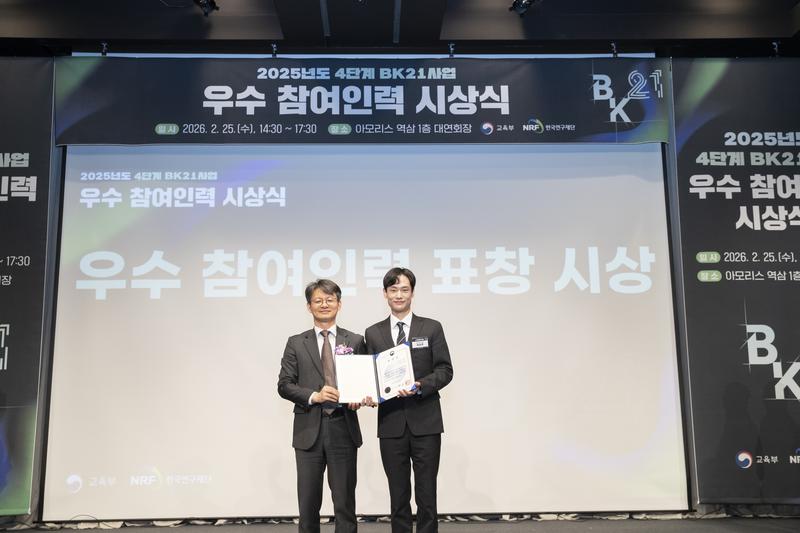
AI와 데이터를 활용해 원전, 교량 등 국가 핵심 인프라의 안전 시스템을 혁신해온 이승준 박사가 지난달 25일, ‘4단계 BK21 사업’ 우수 참여 인력으로 선정돼 교육부장관 표창을 수상했다. 이번 표창은 사고 발생 후 원인을 규명하던 기존의 수동적 대응에서 탈피해, AI로 이상 징후를 선제적으로 감지하고 재난을 예방하는 ‘인프라 안전 지능화’를 선도한 공로를 인정받은 결과다. 지구환경도시건설공학과 신명수 교수 연구실의 이 박사는 2020년부터 BK21 ‘인공지능 중심 건설공학 인재양성팀’의 일원으로 사회기반시설 안전성 평가 연구에 매진해 왔다. 그의 연구는 산업 현장이 직면한 고난도 과제 해결에 초점을 맞췄다. 주행 차량의 하중 특성을 고려한 교량 안전성 평가 모델 개발부터 플랜트 시설 지진 피해 예측, 디지털 트윈 및 비전 AI 기반의 교량 재난 대응 기술 등이 대표적 성과로 꼽힌다. 학술적 역량은 괄목할 만한 수치로 증명됐다. 이 박사는 SCI(E)급 국제 저명 학술지에 총 7편(주저자 6편)의 논문을 게재했으며, 현재 3편의 논문이 추가 심사 단계를 밟고 있다. 국내외 학술대회 발표 실적 또한 29건에 달해 학계의 주목을 받았다. 기술의 실무 적용성도 확보했다. 지진 취약 정보 제공 장치 관련 특허 1건과 소프트웨어 2건을 등록하며 현장 도입 발판을 마련했다. 그는 앞서 2020년 국제 구조건전성 모니터링 대회(IPC-SHM) 3위 입상과 벤틀리 시스템즈(Bentley Systems) 주관 ‘인프라 어워드’ 특별상을 휩쓸며 국제적 경쟁력을 입증했다. 글로벌 협력을 통한 외연 확장도 돋보인다. 일본 교토대와 영국 글래스고대 등 세계 유수 대학과의 교류를 통해 구조 신뢰성 및 재난 위험 평가 분야 선진 기술을 체득했다. 지난 2월 UNIST에서 박사학위를 취득한 그는 현재 한국표준과학연구원(KRISS) 비파괴측정그룹에서 박사후연구원으로 재직하며 연구의 깊이를 더하고 있다. 이승준 박사는 “BK21 사업의 전폭적인 지원 덕분에 연구에만 전념할 수 있었다”며 “기후 위기 시대에 탄소 배출 저감과 인프라 안전이라는 두 마리 토끼를 잡는 연구자로 거듭나겠다”고 포부를 밝혔다. 지도교수인 신명수 학과장은 “검증 절차가 까다로운 원전과 교량 분야에서 AI를 결합한 고난도 연구를 끈기 있게 수행한 결실”이라며 “UNIST의 인프라 안전 기술을 세계 최고 수준으로 고도화하는 데 기여하겠다”고 강조했다.

원자력공학과, ‘원자력 안전규제라운드테이블’ 개최

연구 2026년 01월 22일 목요일

‘100년도 더 가는 난분해성 유해물질’ 과불화화합물 처리 기술 개발

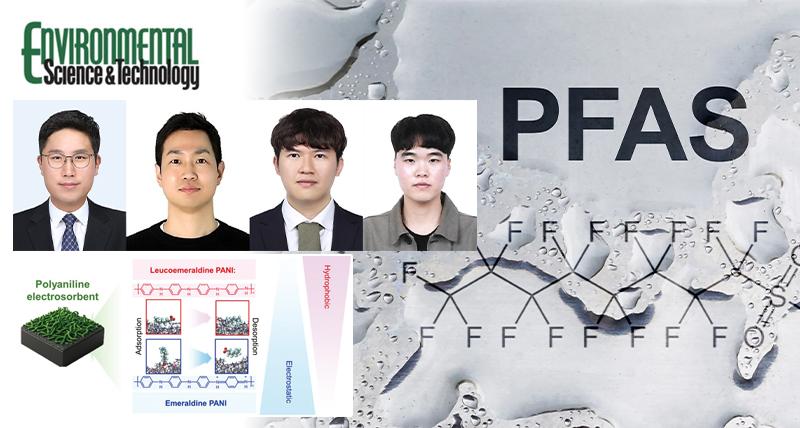
한 번 환경에 유출되면 수백 년간 자연 분해되지 않는 탓에 ‘영구 화학물질’로 불리는 과불화화합물을 처리하는 새로운 기술이 개발됐다. UNIST 지구환경도시건설공학과 김귀용 교수와 반도체소재·부품대학원 김병조 교수팀은 전도성 고분자를 이용해 물속에 저농도로 퍼져 있는 과불화화합물을 흡착 시켜 농축한 뒤 이를 전기 분해하는 기술을 개발했다고 15일 밝혔다. 과불화화합물은 프라이팬 코팅, 방수 의류 제조, 반도체 공정 등에 쓰는 물질로, 자연에서는 거의 분해되지 않는다. 최근 과불화화합물이 극미량만 들어있어도 건강에 영향을 줄 수 있다는 연구가 잇따르면서, 우리나라, 미국 등에서는 음용수에 포함된 과불화화합물의 함량 기준을 리터당 나노그램 수준 이하로까지 강화하고 있는 추세다. 저농도 과불화화합물 폐수까지도 효율적으로 처리할 수 있는 기술 필요성이 대두되는 이유다. 연구팀은 전도성 고분자를 이용해 저농도 폐수에서 과불화화합물을 농축하고 이를 다시 분리해 전기 분해할 수 있는 기술을 개발했다. 전도성 고분자의 성질이 고분자에 걸리는 전압 방향 등에 따라 바뀌는 점에 착안한 기술이다. 이 전도성 고분자가 코팅된 전극을 폐수에 넣고 전압을 가하면, 고분자가 마치 자석이 철가루를 끌어모으듯 과불화화합물을 표면에 모을 수 있다. 전압 방향을 바꾸면 전극에 붙어 있던 과불화화합물이 다시 떨어져 나온다. 이 원리를 이용해 물속에 희석되어 떠다니던 과불화화합물만 선택적으로 골라내어, 고농도로 모은 뒤 따로 처리하면 저농도 상태보다 훨씬 적은 전기에너지로 처리할 수 있게 된다. [연구그림] 전도성 고분자의 전기적 상태 변화에 따른 과불화화합물 흡착 및 탈착 매커니즘 연구팀은 이 방식을 적용해 기존의 전기화학 분해 방식보다 20배 이상 낮은 전기에너지로 과불화화합물을 분해했으며, 하수 처리수, 수돗물과 같은 복잡한 수질 조건에서도 적용될 수 있음을 확인했다. 또 분해조 하나에 과불화화합물을 모으는 흡착 전극과 이를 분해하는 전극이 함께 들어간 정화 시스템까지 만들었다. 분리와 분해가 연속적으로 이뤄질 수 있는 방식이라 과불화화합물 처리 공정을 보다 단순화할 수 있다. 현재 저농도 과불화화합물 폐수는 활성탄 등을 이용해 과불화화합물을 흡착시킨 뒤 이를 고온에서 소각하거나 매립하는, 즉 ‘분리’와 ‘처리’ 단계가 구분된 방식을 통해 주로 처리된다. 특히 매립 처리의 경우, 과불화화합물이 자연계에서 분해되는 것이 아닌 ‘격리’ 수준에 그친다는 문제가 있다. 김귀용 교수는 “전도성 고분자는 일반적인 과불화화합물 흡착제와 달리 탈착 및 재생을 위한 화학약품 처리 등이 필요 없고, 흡착된 과불화화합물을 다시 쉽게 분리해 낼 수 있는 만큼 저농도 과불화화합물 폐수 처리에 경제적인 대안이 될 수 있는 것”이라고 말했다. 또한 “기존 기술들과 달리 분리와 처리 단계를 일원화하고 폐수에서 분리된 과불화화합물을 매립이나 소각하는 것이 아닌 분해까지 할 수 있다는 점도 차별점”이라고 덧붙였다. 연구팀은 분자동역학 시뮬레이션을 통해 전도성 고분자의 과불화화합물 흡착과 탈착 원리도 규명했다. 시뮬레이션 연구를 주도한 김병조 교수는 “이번 계산·시뮬레이션 결과는 향후 오염물 선택성과 가역성을 동시에 갖는 새로운 흡착제를 설계하는 데에도 중요한 기준을 제시할 수 있다”고 설명했다. 이번 연구 성과는 환경·에너지 분야의 권위 있는 국제학술지 환경과학기술(Environmental Science & Technology)에 1월 13일 출판됐다. 연구 수행은 과학기술정보통신부 한국연구재단, 산업통상부 한국산업기술진흥원의 지원을 받아 이뤄졌다.

원자력공학과, ‘원자력 안전규제라운드테이블’ 개최

커뮤니티 2026년 01월 12일 월요일

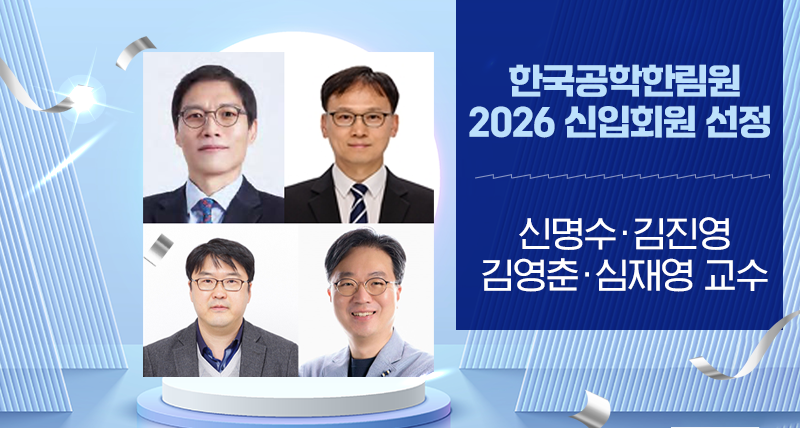
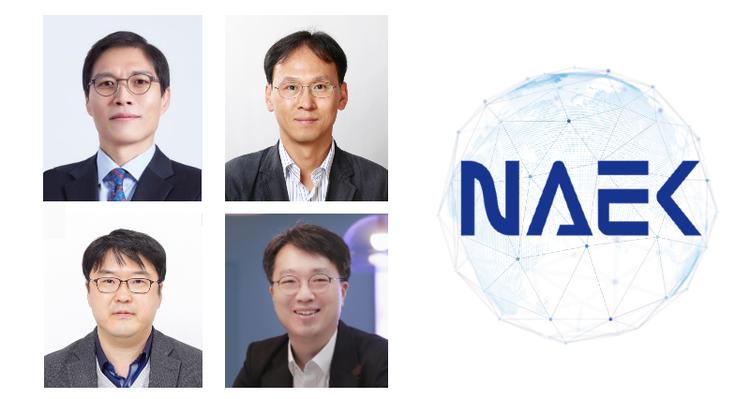
UNIST 교수 4명, 한국공학한림원 2026년 신입회원 선정

UNIST 교수 4명이 국내 공학기술 분야 최고 권위를 지닌 한국공학한림원 2026년도 신입 일반회원에 이름을 올렸다. UNIST는 이번 선정으로 건설환경공학, 화학생물공학, 기술경영정책, 컴퓨팅 등 공학 전반에서 연구 경쟁력을 다시 한번 입증했다. 한국공학한림원은 기업·대학·연구기관에서 연구 성과와 기술개발을 통해 국가 발전에 기여한 공학기술 전문가를 대상으로 회원을 선발한다. 후보 추천 이후 약 10개월에 걸친 다단계 심사를 통해 연구 성과와 기술의 학문적·산업적 파급력을 종합적으로 평가한다. 이번에 신입 일반회원으로 선정된 UNIST 교수는 △건설환경공학분과 신명수 교수(지구환경도시건설공학과) △화학생물공학분과 김진영 교수(에너지화학공학과) △기술경영정책분과 김영춘 교수(기술경영전문대학원) △컴퓨팅분과 심재영 교수(인공지능대학원) 등 4명이다. 이번 성과의 배경에는 연구자 개인의 우수성에 더해, 연구기획팀이 기관차원에서 신입회원 자격요건을 충족한 전임교원 200여 명을 대상으로 제도 취지와 절차를 안내하며 적극적인 독려도 한몫했다. 신명수 교수는 지속가능 건설기술과 내진공학 분야 연구자로, 인공지능(AI) 기반 내진 설계와 성능평가 기술을 발전시켜 왔다. 저탄소 고성능 건설재료 개발을 이끌었으며, 최근에는 3D 프린팅을 활용한 스마트건설 분야로 연구를 확장해 도시 기반시설의 지속가능성과 복원력 향상에 기여하고 있다. 김진영 교수는 차세대 태양전지와 광전자소자 분야 전문가다. 페로브스카이트 태양전지의 효율과 안정성을 동시에 높이는 연구를 통해 상용화 가능성을 끌어올렸다는 평가를 받는다. 국제 공동연구를 통해 재생에너지 확산과 탄소중립 실현에도 성과를 쌓아왔다. 김영춘 교수는 조직이론과 기술혁신전략 분야에서 기성기업과 신생기업의 혁신 전략, 조직학습과 기업 혁신 성과 관계를 실증적으로 분석해 왔다. 연구 결과는 조직과학(Organization Science), 연구정책(Research Policy) 등 국제 학술지에 게재됐다. 심재영 교수는 시각지능(컴퓨터비전) 분야 연구자이자 UNIST 인공지능대학원장이다. 영상과 대규모 3D 데이터 복원 기술을 개발해 자율주행차·로봇·드론·디지털트윈 관련 산업 분야 연구를 수행해 왔으며, 인공지능 기반 산업 현장 문제 해결 역량을 갖춘 인재 양성에도 힘을 쏟고 있다. 박종래 총장은 “UNIST에서 세계 수준의 연구 성과가 지속적으로 나올 수 있도록 지원을 강화하겠다”며 “우수한 연구 성과가 국내외 주요 학술·전문 기구에서 정당하게 평가받을 수 있도록 뒷받침하겠다”고 말했다.

원자력공학과, ‘원자력 안전규제라운드테이블’ 개최

커뮤니티 2026년 01월 06일 화요일

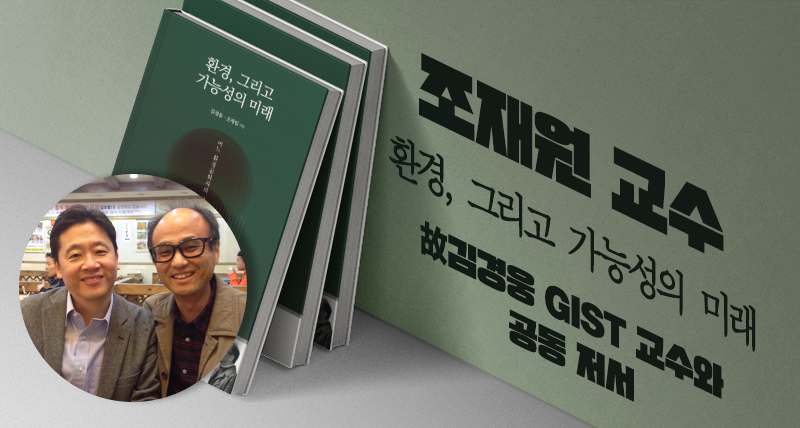
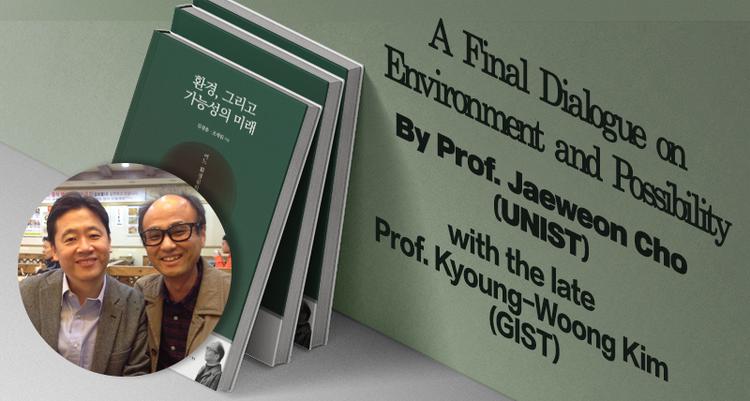
조재원 교수, 30년 우정 故 김경웅 GIST 교수와 나눈 ‘마지막 환경 담론집’ 출간

환경을 평생 학문으로 삼아온 두 환경공학자의 대화가 한 권의 책으로 나왔다. 조재원 UNIST 지구환경도시건설공학과 교수와 지난해 여름 별세한 故 김경웅 GIST 교수가 함께 쓴 《환경, 그리고 가능성의 미래: 어느 환경공학자의 마지막 담론》이다. 30년 넘게 환경을 고민해 온 두 학자의 사유를 담았다. 책은 기후·에너지 위기, 인구 감소, 인공지능 윤리, 양자 컴퓨터 시대 가치 등 동시대 쟁점을 다룬다. 특히, 모든 문제를 환경 관점 하나로 묶는다. 환경을 보호 대상이나 정책 수단으로 보지 않고, 기술과 사회, 윤리를 가르는 기준으로 놓는다. 이런 문제의식은 두 저자 삶에서 나왔다. 두 교수는 30여 년간 환경 연구와 교육 현장을 함께했다. 시대 변화 앞에서 환경이 늘 중요하다고 말해졌지만, 중심에 서지 못했다는 공통 인식도 나눴다. 책은 그 이유를 묻고 답한다. 주변에 있었기에 오히려 모든 문제를 잇는 원리라고 강조한다. 출간 과정은 쉽지 않았다. 공동 저자인 김경웅 교수가 집필 도중 갑작스럽게 세상을 떠났다. 책은 미완 위기에 놓였다. 그러나 고인이 28년간 몸담았던 GIST 대학 출판부 ‘GIST Press’와 동료 교수들의 뜻이 모였다. 프로젝트는 이어졌고, 책은 세상에 나왔다. 김 교수는 토양·지하수 오염 정화 분야 세계적 연구자였다. 국제학술지 편집위원을 지냈고, 여러 학술상을 받았다. 연구를 현장으로 옮기는 데도 힘썼다. 전기 없이 물을 정화하는 ‘옹달샘 프로젝트’를 조재원 교수와 같이 이끌었다. 무동력 멤브레인 수처리 장치 ‘GIST 희망정수기’를 개발해 20여 개국에 보급했다. 캄보디아 왕립프놈펜대학교 환경공학과 학위과정 개설도 주도했다. 이런 실천은 조재원 교수의 시선과 맞닿았다. 조 교수는 환경공학을 기술 영역에 가두지 않았다. 사회가 무엇을 선택해야 하는지 묻는 사고의 틀로 다뤄왔다. 해결책 나열보다 조건과 책임을 먼저 살폈다. 두 저자 대화는 환경을 다시 시대 중심에 올려놓는다. 책은 기술 시대를 바라보는 태도에 변화를 꾀한다. 인공지능과 양자 컴퓨터로 상징되는 미래 앞에서 낙관과 거부를 나누지 않는다. 기술이 놓인 조건을 묻고, 그 책임을 누가 질 것인지 질문한다. 환경이라는 관점 없이는 미래를 이해할 수 없다고 말한다. 생각이 달라 바로 그 다름의 틈이 있었기에 서로 이해할 수 있었던 두 공저자의 친구 사이가 “틈과 사이의 환경 철학”으로 고스란히 책에 담겨 있다. 미완의 대화는 그들을 거쳐간 제자들의 몫이라고 저자는 끝으로 말한다. 조재원 교수는 “친구가 떠난 빈 공간이 위기를 맞은 세상을 채울 가능성으로 느껴진다”며 “옆자리는 비었지만, 동료가 남긴 시간성은 영원할 것”이라고 애도를 표했다.

원자력공학과, ‘원자력 안전규제라운드테이블’ 개최

대학소식 2025년 05월 19일 월요일

UNIST, 오사카 엑스포서 ‘미래 도시 설계’ 제시

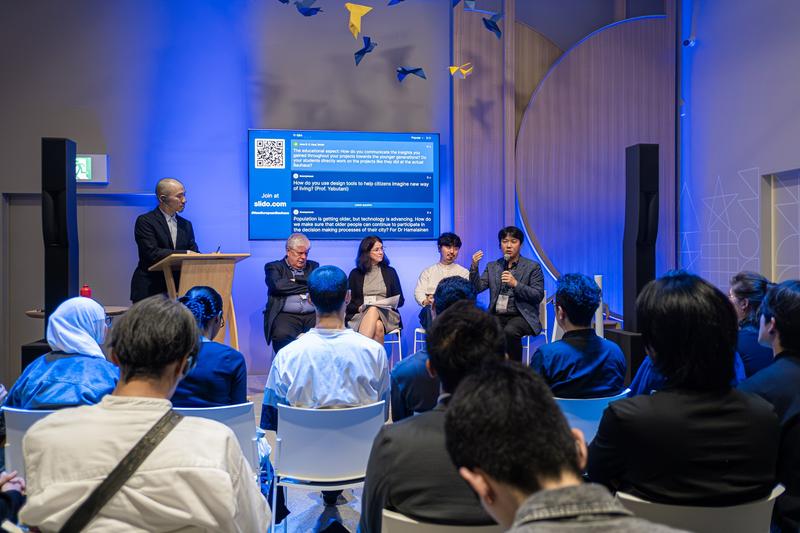
UNIST 연구진이 13일, ‘2025 오사카 엑스포’에서 지방소멸 대응을 위한 미래 도시 설계 방안을 제시했다. 이승호 디자인학과 교수와 조기혁, 김정섭 지구환경도시건설공학과 교수는 유럽연합 초청을 받아 ‘도시의 미래를 그리다: 디자인, 기술, 그리고 민주주의’를 주제로 한 패널 토론을 이끌었다. 이 토론은 지역소멸과 인구 감소 문제를 해결하기 위한 새로운 정책을 논의하는 자리였다. 국제 토론이 이뤄진 오사카 엑스포 행사장 전경(유럽연합파빌리온) 토론은 EU 집행위원회 디지털 정책 수석부위원장(전 핀란드 교육부장관) 헨나 비르꾸넨 의원 기조연설로 시작됐다. 그는 "디지털 전환은 기술이 아닌, 사람과 공동체를 위한 것"이라며 "디자인, 기술, 시민 참여가 조화로운 도시는 더 포용적이고 회복력 있는 사회를 만든다"고 했다. 연구책임자 조기혁 교수는 밀양과 안동에서 진행 중인 시민 참여와 기술을 결합한 미래 도시 설계 프로젝트를 소개했다. 그는 "디지털 기술은 인구가 감소하는 쇠퇴도시에서 시민 중심 정책을 만드는 데 중요한 수단"이라며 "미래 도시는 지속적인 정책 실험장이 되어야 한다"고 강조했다. 이승호 교수가 포럼 좌장을 맡아 토론을 이끌고, 마크 보덴 박사(오른쪽)이 참여하고 있다. 좌장을 맡은 이승호 교수는 "모든 도시는 현재도 변화하고 있다"며 "디자인과 기술 그리고 시민 참여와 기술 융합을 통해 도시 변화를 지속적으로 이뤄가야 한다"고 전했다. 엑스포 현장에서 이 프로젝트를 선보인 김정섭 교수는 "UNIST 연구가 지방소멸 문제 해결에 주목받았다"고 평가하며, "앞으로도 지역 시민과 함께 도시 미래를 설계하는 연구를 확장해 나갈 것"이라고 밝혔다. 토론에 참여한 패널들이 기념사진을 촬영하고 있다. (왼쪽부터 이승호 교수, 마크 보덴 박사, 헤멜레이넨 박사, 조기혁 교수, 야부타니 교수) UNIST 교수진과 함께 EU 공동연구센터 마크 보덴 박사, 핀란드 에스포시(市) 메르비 헤멜레이넨 박사, 일본 도야마시 유슈케 야부타니 교수도 이번 토론에 의견을 더했다. 마크 보덴 박사는 "유럽은 각기 다른 역사와 문화를 지닌 만큼, 동일한 문제라도 도시별 맞춤형 정책이 필요하다"며 "데이터 기반 정책 입안과 시민 참여 중심의 도시 설계가 핵심"이라고 말했다. 메르비 헤멜레이넨 박사는 "기술은 더 나은 도시를 만들기 위한 수단이어야 한다"며 핀란드에서 AI와 VR을 활용한 외국인 거주자와 장애인을 위한 도시 설계 사례를 공유했다. 유스케 야부타니 교수는 "도시 네트워크는 행정이 아닌, 지역 주민 참여로 설계돼야 한다"고 주장하며, 인구 감소와 고령화 문제 해결 방안을 논의했다. 기초연구실지원사업 프로젝트 참여자들이 미래시민워크숍을 진행하고 있다. 한편, UNIST 연구진은 한국연구재단 ‘지방소멸 대응을 위한 라이트사이징 기술 기초연구실’ 지원을 받아 밀양과 안동에서 시민 참여형 도시 설계 프로젝트를 진행 중이다. 연구진은 두 도시를 매주 방문해 시민이 동참하도록 유도하고, 미래 도시를 상상하는 과제를 수행하고 있다.

원자력공학과, ‘원자력 안전규제라운드테이블’ 개최

연구 2025년 04월 03일 목요일

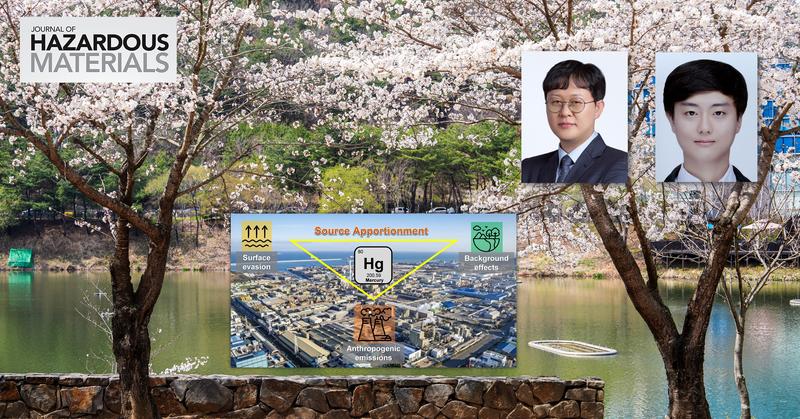
“어디서 왔는지 알아낸다”... 대기 중 수은 오염원 평가법 개발

대기 중 수은의 출처를 정확하게 알아낼 수 있는 기술이 개발됐다. UNIST 지구환경도시건설공학과 최성득 교수팀은 대기 중 수은 출처와 공간적·계절적 분포를 정확하게 알아낼 수 있는 평가기술을 개발했다. 고해상도 대기모니터링과 수은 동위원소 분석을 기반으로 하는 기술이다. 수은은 다양한 동위원소가 존재하는데, 이 동위원소의 비율을 분석해 수은의 출처를 알아낼 수 있다. 수은의 출처를 3가지로 나눠 분석하는 기법을 통해 정확도를 높였다. [연구그림] 삼원 혼합 모델을 통한 대기중 수은 오염원 평가법. 연구팀은 이 평가법으로 울산 지역 대기에 대한 분석을 진행했다. 30개 지점의 대기를 1년간 채취해 분석한 결과, 울산 지역 수은 농도는 계절과 지역에 따라 큰 차이를 보였다. 평균 농도는 여름철이 9.3 ng/m³로 가장 높았으며, 가을철에 가장 낮은 4.4 ng/m³를 기록했다. 비철금속 산업단지에서는 최고 농도인 21.9 ng/m³를 보였는데, 이는 비철금속산업이 수은의 주요 배출원인임을 시사한다. 계절풍이 수은 확산에 중요한 영향을 미치는 것으로 분석됐다. 여름과 봄철에는 남동풍이 우세하여 해안가 산단에서 배출된 수은이 울산 내륙으로 확산됐고, 가을과 겨울철에는 북서풍이 대기 중 수은을 동해상으로 이동시켜 수은 농도가 낮아졌다. 특히, 여름철에는 수은 농도의 73%가 비철금속 산업과 같은 인위적 배출로부터 기인한 것으로 나타났다. 연구팀은 산업단지가 있는 타지역에 대한 장기 분석을 진행 중이며, 이 분석법은 인접국에서 넘어오는 수은의 기여도를 정확하게 파악하는 데도 도움이 될 것이라고 설명했다. 수은은 과량 노출되면 뇌와 신장 손상, 폐 질환, 소화기 이상, 혈압 상승, 피부발진 등을 유발하며, 장기적으로 수은 중독이나 미나마타병을 초래할 수 있는 중금속이다. 끓는점과 증기압이 낮아 기체 상태로 대기 중에 존재할 수 있다. 최성득 교수는 “검출된 수은 농도가 미국환경보호청 권고 기준(300 ng/m³)을 초과하지 않지만, 수은은 잔류성이 큰 물질이므로 산업단지에 대한 지속적인 모니터링과 관리가 필요하다”고 말했다. 이번 연구는 UNIST 조인규 연구원이 제1저자로, POSTECH 권세윤 교수와 국립수산과학원 임재현 박사, 황동운 박사가 공동 연구자로 참여했다. 연구 수행은 울산녹색환경지원센터, 해양수산과학기술진흥원, 한국연구재단의 지원으로 이뤄졌으며, 연구 결과는 환경 분야 최상위 학술지인 유해물질저널(Journal of Hazardous Materials) 4월호에 출판됐다.

원자력공학과, ‘원자력 안전규제라운드테이블’ 개최

커뮤니티 2025년 01월 22일 수요일

김효은 학부생, 무안 참사 속 자원봉사 "이웃 아픔 어루만진 겨울방학"

“이웃들이 참사에 희생되신 것을 알고 가만히 있을 수 없었습니다.” 전남 무안 제주항공 여객기 참사 현장에서 자원봉사 활동을 한 김효은 학생은 봉사에 나서게 된 계기를 21일 이렇게 밝혔다. UNIST 지구환경도시건설공학과 4학년인 김효은 학생은 방학을 맞아 광주 광산구 집에 왔다가 뉴스로 참사 소식을 접했다. 시간이 흘러 부모님의 지인, 친구의 친구 등 소중한 이웃 3명이 참사에 희생됐다는 것을 알게 됐다. 이웃들의 안타까운 소식에 가만히 있을 수가 없었다. 유가족들을 돕고 싶었다. 자원봉사 활동 경험은 많지만 재난 현장 자원봉사는 어떻게 신청해야 하는지 몰랐다. 연말과 새해 연휴가 끼어 있어 자원봉사 단체도 쉬지 않을까 걱정이 되었다. 고민 끝에 그는 2일 광주시 자원봉사센터에 e메일을 넣었다. 광주시 자원봉사센터에서 곧바로 전화 연락이 왔다. 김효은 학생은 3일부터 6일까지 나흘 동안 전남 무안국제공항 1층의 구호 물품을 접수받고 나눠주는 곳에서 자원봉사에 투입됐다. 그곳에서 구호 물품을 나눠주면서 재난 현장의 빛과 그림자를 가까이서 볼 수 있었다. 밤새 수색작업을 하던 소방관과 경찰관들은 오후 9∼10시경 빵, 우유를 먹기 위해 구호물품센터를 찾아왔다. 그들은 껍질을 까먹는 귤도 먹지 못했다. 촌각을 다투는 수색 현장에서 귤껍질을 까는 시간조차 낭비할 수 없었기 때문이다. 소방관과 경찰관들은 간단하게 배를 채울 수 있는 빵, 우유를 요청했다. 유가족들은 슬픔에 차 식사를 제대로 하지 못했다가 밤늦게 라면을 찾기도 했다. 반면 유족이나 수색조가 아닌데 샤워용품 등 구호 물품을 잔뜩 챙겨가는 얌체들도 있었다. 서너 시간에 한 번씩 찾아와 구호물품을 챙겨가거나 쇼핑백에 담아가기도 했다. 김효은 학생은 이번 참사 같은 큰 재난 상황을 보지 못했다. 이런 큰 재난 상황에 유가족들에게 작은 힘이라도 보태고 싶어 자원봉사에 나섰고 그만큼 보람이 컸다. 그는 “소중한 이웃들이 희생된 것을 알고 어떻게든 돕고 싶은 마음뿐이었다”며 “앞으로 대학원에 진학해 학업을 이어갈 계획이지만 이번 일을 계기로 자원봉사 활동을 계속 꾸준히 이어가고 싶다”고 말했다. 이어 "UNIST 학우들도 학업과 함께 주변 이웃을 돌아보는 봉사 활동에 관심을 가졌으면 좋겠다"고 덧붙였다. <본 기사는 2025년 1월 22일 동아일보 “제주항공 참사 나눔 이야기 〈4〉 이웃 아픔 어루만진 겨울방학"라는 제목으로 실린 것입니다.>

원자력공학과, ‘원자력 안전규제라운드테이블’ 개최

연구 2025년 01월 02일 목요일

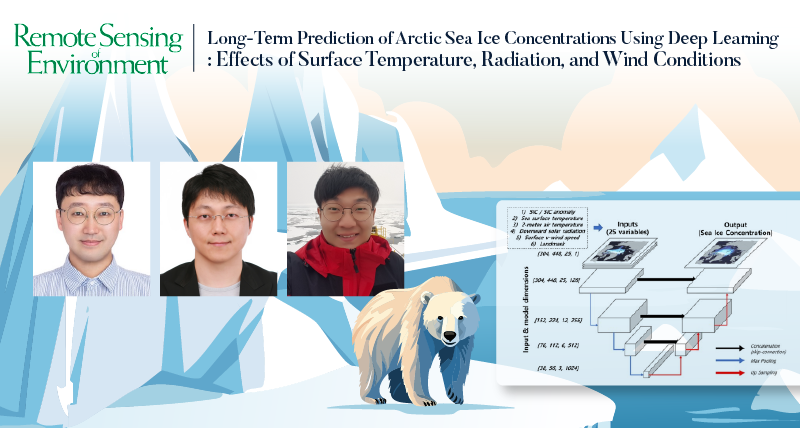
“1년 앞까지 내다본다”... 북극 해빙 농도 예측 AI모델 개발

최대 1년 뒤의 북극 해빙 변화를 예측할 수 있는 인공지능(AI) 모델이 나왔다. 중장기 예측 정보를 제공할 수 있어 북극 항로 개발, 해양 자원 탐사 등에 도움이 될 전망이다. UNIST(총장 박종래) 지구환경도시건설공학과 임정호 교수팀은 1년 뒤의 북극 해빙 농도를 6% 이내 오차 정확도로 예측할 수 있는 인공지능 모델을 개발했다. 해빙 농도는 단위면적에서 얼음이 덮인 영역의 비율을 말한다. 연구팀은 유넷(UNET)을 활용해 과거 북극 해빙 농도의 변화 패턴과 기온 및 수온, 태양 복사량, 바람 같은 주요 기후 요인 간의 복잡한 관계를 학습시켜 이 같은 AI 모델을 개발했다. UNET은 AI가 위성영상과 같은 이미지 데이터 간의 관계를 학습하는 딥러닝 알고리즘 중 하나다. [연구그림] 딥러닝(UNET)을 이용한 북극 해빙 예측 모델 개발된 모델은 중장기 예보 정확도가 높았다. AI 모델의 예측값과 과거 실제 해빙 농도 값을 비교하는 방식으로 정확도를 평가해 본 결과, 3개월, 6개월, 12개월 예측에서 모두 6% 미만의 평균 예측 오차를 기록했다. 기존 모델은 예측 기간이 길어질수록 평균 예측 오차가 증가했다. 또 이 모델은 이례적으로 해빙이 급격히 감소했던 상황에서도 안정적인 예측 성능을 보였다. 2007년, 2012년 여름과 같이 해빙이 급격히 녹아버린 경우, 기존 모델은 17.35%의 평균 예측 오차를 기록한 반면, 개발된 AI 모델은 7.07%의 평균 예측 오차를 기록해 평균 예측 오차 값이 절반 이하로 줄었다. 연구팀은 해빙 농도 중·장기 예측에서 중요한 역할을 하는 기후 요소들도 밝혀냈다. UNET 모델 예측 결과 간 차이를 분석한 결과, 얼음 두께가 얇은 해빙 가장자리에서는 태양복사열과 바람이 주요 변수로 작용했다. 임정호 교수는 “기존 물리 기반 모델의 한계를 극복하고, 다양한 환경 요인들이 북극 해빙 변화에 미치는 복합적인 영향을 규명한 연구”라며 “북극 항로 개발, 해양 자원 탐사, 기후 변화 대응 정책을 수립하는 데 도움이 될 것”이라고 밝혔다. 이번 연구는 국제학술지인 환경원격탐사(Remote Sensing of Environment)에 12월 11일 자로 온라인 게재됐으며, 극지연구소, 해양수산부의 지원을 받아 이뤄졌다.

원자력공학과, ‘원자력 안전규제라운드테이블’ 개최

Research 2026년 04월 22일 수요일

New Study Uncovers Shift in Climate Drivers Intensifying Wildfires in Australia

Abstract Wildfire variability in Southeastern Australia (SEA) has intensified in recent decades, posing increasing risks to ecosystems and agriculture under a changing climate. However, the mechanisms driving the recent amplification of extreme fire weather remain unclear. Using austral-summer data from 1981–2022, we quantify interannual links between the Forest Fire Danger Index (FFDI) and land–atmosphere variables. Fire Weather Days (FWD) are defined as days exceeding an extreme FFDI threshold each fire season and are validated against satellite-based burned area and fire intensity across SEA. We show that recent fire risk in SEA is characterized not by a gradual increase but by a regime shift in extreme fire weather conditions. An early-2000s transition is marked by enhanced interannual variability and an approximately fivefold increase in FWD, linked to increased positive skewness in daily FFDI. Among FFDI components, the drought factor (DF), representing hydrological stress, exhibits the largest increase in extreme occurrences, especially when co-occurring with high temperature (T) and low relative humidity (RH). The contribution of compound DF & RH & T events to total FWD more than doubles between 1981–2001 (P1) and 2002–2022 (P2). Segmented regression further reveals strengthened interannual FWD sensitivity to DF in P2. In P1, variability reflected atmospheric warming and drying, whereas P2 is characterized by intensified land–atmosphere coupling that amplifies hydrological stress and compound extremes. This transition coincides with changes in large-scale circulation, with the Southern Annular Mode (SAM) emerging as the dominant driver of FWD variability in the recent period, while ENSO exerted a stronger influence earlier. Increased FWD variability is also closely linked to interannual maize yield fluctuations across SEA. These findings highlight a hydrologically-driven regime shift in extreme fire weather and underscore the need for integrated climate-fire-agriculture risk assessment. An international team of researchers, affiliated with UNIST, has identified a dramatic transformation in wildfire patterns across Southeastern Australia (SEA). Analyzing data from 1981 to 2022, the research shows that since the early 2000s, the region has experienced a fivefold increase in extreme fire weather days, driven increasingly by the Southern Annular Mode (SAM) rather than the traditionally dominant El Niño–Southern Oscillation (ENSO). This shift highlights new challenges in predicting and managing wildfires under a changing climate. Led by Professor Myong-In Lee from the Department of Civil, Urban, Earth and Environmental Engineering at UNIST, this study was conducted in collaboration with experts from the University of Hawaii and POSTECH. In this study, the team identified a regime shift beginning in the early 2000s, characterized by emphasized interannual variability and a sharp rise in extreme fire weather days. Over the past two decades, wildfire risk volatility has more than doubled. This change is primarily attributed to the strengthening of land-atmosphere coupling, where drought conditions intensify surface heating, creating a feedback loop that fuels more frequent and severe wildfires. beginning in the early 2000s, marked by heightened interannual variability and a sharp rise in extreme fire weather days. Over the past two decades, wildfire risk volatility has more than doubled. This change is primarily driven by strengthened land–atmosphere coupling: drought conditions dry out surface soils, creating a feedback loop that amplifies surface heating and fosters more frequent and severe wildfires. While ENSO has traditionally been the main climate driver influencing Australian wildfires, recent evidence indicates that the SAM’s influence has grown, now serving as the dominant factor regulating wildfire variability. Kiwook Kim, the main author of the study, comments, “Our findings emphasize the need for enhanced monitoring of atmospheric circulation patterns and soil moisture levels. This knowledge is vital for improving fire risk predictions and informing climate adaptation strategies to safeguard communities and ecosystems.” “Understanding how climate factors influence wildfires is more critical than ever,” says Professor Lee. “Recognizing the increasing role of the Southern Annular Mode and the complex land-atmosphere interactions enables us to develop more accurate prediction models and better prepare for future wildfire seasons.” The findings of this research were published in Agricultural and Forest Meteorology on April 11, 2026. This research was supported by the Korea Environment Industry & Technology Institute (KEITI) under the Climate Change R&D Project for New Climate Regime project, funded by the Ministry of Environment (MOE) of Korea. Journal Reference Kiwook Kim, Myong-In Lee, Seungseok Lee, et al. , “Local and remote drivers of increased variability in extreme wildfire conditions in Southeastern Australia,” Agric. For. Meteorol., (2026).

원자력공학과, ‘원자력 안전규제라운드테이블’ 개최

Research 2026년 04월 10일 금요일

Sea Surface Temperature Shifts in the Pacific Improve Year-Ahead Winter Climate Predictions

Abstract The winter North Atlantic Oscillation (NAO) is a dominant mode of climate variability affecting temperature and precipitation across the Northern Hemisphere, yet its prediction at seasonal-to-decadal (S2D) lead times remains challenging. Here, using multi-year hindcasts from a multi-model ensemble initialized on 1 November for 1962–2019, we show that NAO skill one year ahead improves significantly when the El Niño–Southern Oscillation (ENSO) undergoes a phase transition next year. This improvement is linked to the northward propagation of anomalous atmospheric angular momentum, which dynamically organizes the NAO and is captured in reanalysis and models. During ENSO transition years, prediction skill increases with ensemble size, and when more than 10 members are used, the forecasts display the signal-to-noise paradox. These findings highlight the potential for enhanced one-year NAO predictability when ENSO transitions are present and large ensemble sizes are used in S2D prediction systems, given the skillful prediction of ENSO phase transitions at one-year lead times by multi-model ensembles. A research team, affiliated with UNIST, in collaboration with the UK Met Office Hadley Centre, has identified that major changes in the equatorial Pacific’s sea surface temperatures—such as transitions between El Niño and La Niña—significantly boost the accuracy of winter weather forecasts in the Northern Hemisphere. Led by Professor Myong-In Lee in the Department of Civil, Urban, Earth, and Environmental Engineering, their findings mark a breakthrough in understanding how tropical Pacific variability influences mid-latitude climate prediction. The study reveals that during ENSO transition years, the correlation coefficient for NAO prediction improves markedly—up to 0.60—compared to near-zero correlations in stable ENSO years. This phenomenon occurs because the oceanic temperature changes trigger atmospheric angular momentum shifts that gradually propagate northward, affecting the NAO pattern approximately one year later. The process involves the interaction of delayed effects—initiated by sea surface temperature anomalies—and the rapid transfer of atmospheric signals via Rossby waves, large-scale planetary waves influenced by Earth's rotation. “During ENSO transition years, the tropical ocean changes significantly influence the atmospheric circulation, strengthening the signals used for long-term forecasting,” explained Professor Myong-In Lee. “This understanding can help improve climate prediction models and support strategic planning in sectors like agriculture and energy.” These insights provide a crucial step toward enhancing Korea’s climate prediction capabilities and developing more accurate regional models. By understanding the dynamical mechanisms linking tropical Pacific variability to Northern Hemisphere winter patterns, researchers can improve forecasts for long-term climate variability, aiding disaster preparedness and resource management. This research was supported by the Korea Meteorological Administration and the National Institute of Meteorological Sciences, through projects focused on operational climate prediction systems and climate crisis response strategies. The findings of this research have been published in Nature Communications on March 25, 2026. The study has been supported by the Korea Meteorological Administration (KMA) and the National Institute of Meteorological Sciences (NIMS), through projects focused on operational climate prediction systems and climate crisis response strategies. Journal Reference Kiwook Kim, Myong-In Lee, Adam A. Scaife et al., "ENSO phase transition enables prediction of winter North Atlantic Oscillation one year ahead," Nat. Commun., (2026).

원자력공학과, ‘원자력 안전규제라운드테이블’ 개최

Community 2026년 01월 14일 수요일

Four UNIST Professors Elected as New Member of National Academy of Engineering of Korea

Four faculty members from UNIST have been elected as new members of the National Academy of Engineering of Korea (NAEK), one of Korea's most prestigious honors related to engineering and technology. On January 11, NAEK announced that the election of 84 new general members and 49 regular members in recognition of their distinguished and sustained achievements in research and technological advancement. Election to NAEK membership is widely regarded as one of the highest professional distinctions accorded to engineers in Korea. NAEK members are selected through a rigorous, multi-stage evaluation process conducted over ten months, recognizing individuals who have contributed to national development through innovation, research excellence, and talent cultivation. The four UNIST faculty members elected as 2026 general members are Professor Myoungsu Shin (Department of Civil, Urban, Earth and Environmental Engineering) in the Architectural, Civil and Environmental Engineering Division, Professor Jin Young Kim (School of Energy and Chemical Engineering) in the Chemical and Biological Engineering Division, Professor Young-Choon Kim (Graduate School of Technology and Innovation Management) in the Technology, Management and Policy Division, and Professor Jae-Young Sim (Graduate School of Artificial Intelligence) in the Computer Science and Engineering Division. In addition to individual research excellence, institutional support also contributed to this achievement. UNIST Research Planning Team identified eligible faculty members and provided guidance throughout the nomination process, helping to ensure broad and informed participation. Professor Myoungsu Shin is recognized for his work in sustainable construction technologies and earthquake engineering. He has advanced AI-based seismic design and performance evaluation methods, led the development of low-carbon, high-performance construction materials, and recently expanded his research into smart construction using 3D printing technologies to enhance the resilience of urban infrastructure. Professor Jin Young Kim specializes in next-generation solar cells and optoelectronic devices. His research on perovskite solar cells has been widely noted for improving both efficiency and long-term stability, strengthening their prospects for commercialization. Through international collaborations, he has also contributed to renewable energy research and carbon-neutrality initiatives. Professor Young-Choon Kim conducts research in organizational theory and technology innovation strategy. His empirical studies examine innovation strategies in both established firms and startups, as well as the relationship between organizational learning and innovation performance. His work has appeared in leading international journals such as Organization Science and Research Policy. Professor Jae-Young Sim is a researcher in visual intelligence and serves as Dean of the UNIST Graduate School of Artificial Intelligence. His research on image and large-scale 3D data reconstruction supports applications in autonomous driving, robotics, drones, and digital twin technologies. He is also actively involved in educating students with the skills needed to apply AI to real-world industrial challenges. UNIST President Chong Rae Park said, "We will continue to strengthen institutional support so that world-class research can flourish at UNIST." He added, "At the same time, we will ensure that outstanding research achievements are appropriately recognized by leading academic and professional organizations, both in Korea and abroad."

원자력공학과, ‘원자력 안전규제라운드테이블’ 개최

Community 2026년 01월 13일 화요일

New Book Brings Together the Final Reflections of Two Environmental Engineers

A lifetime of shared thought and dialogue between two environmental engineers has been brought together in a single volume. 《A Final Dialogue on Environment and the Future of Possibility》 is a coauthored work by Professor Jaeweon Cho of the Department of Civil, Urban, Earth, and Environmental Engineering at UNIST and the late Professor Kyoung-Woong Kim of Gwangju Institute of Science and Technology (GIST), who passed away unexpectedly in the fall of 2025. The book presents the culmination of conversations the two environmental engineers shared over more than 30 years of research, teaching, and intellectual companionship devoted to the question of how environmental thinking can guide the future. Work on the book was interrupted by the sudden passing of Professor Kim before the manuscript was completed. However, with the support of GIST Press—where he spent 28 years of his academic career—and the collective commitment of colleagues who wished to honor his voice, the project was brought to completion. The book brings together his final reflections on environmental challenges and the future he continued to care deeply about. Environmental ethics is a form of scientific practice within society, aimed at proposing meaningful alternatives to the challenges we face. Cover of 《A Final Dialogue on Environment and the Future of Possibility》. l Image Credit: GIST Press Rather than treating the environment as a policy issue or a field of technical intervention alone, the book presents it as a guiding principle—one that cuts across technology, society, and ethics. Through dialogue and reflection, the authors argue that environmental thinking, long regarded as peripheral, has the potential to serve as a unifying framework for understanding the defining challenges of our time. The book addresses a wide range of contemporary issues, including the climate and energy crisis, demographic change, the ethics of artificial intelligence, and the values emerging in the era of quantum computing. These topics are examined through the lens of environmental engineering, not as isolated problems but as interconnected questions shaped by shared conditions and responsibilities. The authors' perspective is grounded in their lived experience as engineers who chose to step beyond disciplinary boundaries. Rather than offering prescriptive solutions, they focus on the assumptions, choices, and responsibilities that underlie technological progress. In doing so, they articulate a form of environmental philosophy shaped not by abstraction, but by long engagement with real systems and real consequences. Professor Kim was internationally recognized for his work in soil and groundwater remediation and for his commitment to translating research into practice. Alongside Professor Cho, he led initiatives, like the Ongdalsam Project, which developed non-powered membrane water purification systems distributed to more than 20 countries, and helped establish an environmental engineering degree program at the Royal University of Phnom Penh in Cambodia. These practical efforts resonated deeply with Professor Cho's own approach to environmental engineering, which treats the field not merely as a technical discipline, but as a way of thinking about what society chooses to value and protect. Their shared yet differing perspectives—what Professor Cho later described as "[T]he space between agreement and difference"—form the intellectual core of the book. Reflecting on his colleague and friend, Professor Cho writes, "The space left behind by my friend feels like a possibility—one that may yet help fill a world facing crisis. Though the seat beside me is empty, the time he left with us will remain." In closing, the authors acknowledge that their dialogue remains unfinished, and that its continuation now belongs to the students and researchers who will carry it forward.

원자력공학과, ‘원자력 안전규제라운드테이블’ 개최

Research 2025년 12월 31일 수요일

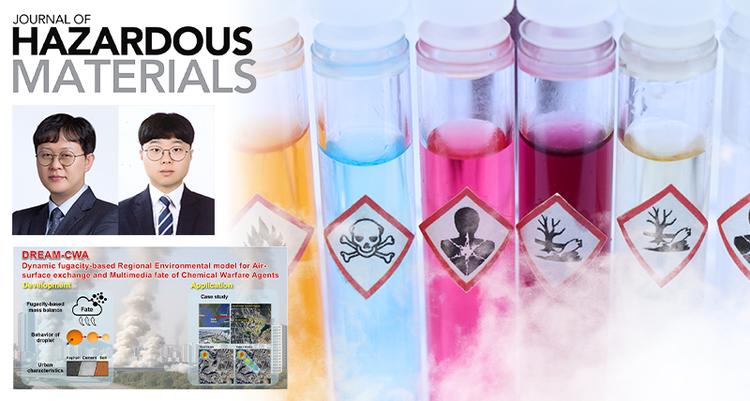
New Simulation Model Provides Accurate Assessment of Urban Spread and Residual Risks of CWAs

Abstract Chemical warfare agents (CWAs) are highly toxic and environmentally persistent, posing human health risks. For example, Venomous Agent X (VX) exhibits low volatility and water solubility, allowing persistence as liquid-phase droplets. To quantify liquid-phase CWA behavior, DREAM-CWA (Dynamic fugacity-based Regional Environmental model for Air-surface exchange and Multimedia fate of Chemical Warfare Agents) was developed as a GIS-based Level IV fugacity model incorporating a droplet compartment. The model estimates phase partitioning and intermedia transport of droplets. Soil, asphalt, coated concrete (non-porous), and water are represented as distinct surface compartments to reflect urban environmental characteristics. Validation against the fugacity model CoZMo-POP 2 confirmed the reliability of DREAM-CWA. A case study of a hypothetical VX chemical attack was conducted as a preliminary evaluation to optimize the multimedia framework, focusing on liquid-phase persistence and multimedia interactions. Initially, VX was retained in droplets and surfaces, with volatilization driving increases in air concentrations. Soil and sediment acted as a dominant short-term reservoir and long-term sink, respectively. Secondary emissions from droplets and surfaces sustained atmospheric exposure. By providing volatilization fluxes resolved in time and space, DREAM-CWA outputs can be coupled with computational fluid dynamics simulations to estimate near-surface dispersion and exposure. This integrated framework offers a robust tool for assessing the environmental risks of CWAs and supporting decision-making during chemical attack responses. A research team, affiliated with UNIST has reported a new simulation tool to better understand how liquid-phase chemical warfare agents (CWAs) disperse and persist in urban environments. Their findings demonstrate that certain highly toxic chemical agents can remain dangerous even after initial deployment, mainly because droplets that settle on surfaces can evaporate over time and cause secondary exposure. Professor Sung-Deuk Choi and his team at in the Department of Civil, Urban, Earth, and Environmental Engineering at UNIST, in collaboration with the Agency for Defense Development (ADD) announced the successful development of DREAM-CWA (Dynamic fugacity-based Regional Environmental model for Air-surface exchange and Multimedia fate of Chemical Warfare Agents)—a model designed to predict how liquid chemical agents move and linger after release. What sets DREAM-CWA apart from existing models is its ability to explicitly consider that chemical agents can stay in droplet form on surfaces, like soil, asphalt, or concrete. The model also divides urban surfaces into categories, allowing for more precise simulations of evaporation rates and how much toxin re-enters the air. Using DREAM-CWA, the team simulated a scenario where a persistent, highly toxic chemical agent is released in a liquid state at room temperature. The results showed that, 30 minutes after the release, the evaporation of droplets on the ground caused airborne toxin levels to spike 32 times higher than initially, with the amount of toxin released back into the air increasing by about 50%. This data can be fed into three-dimensional computational fluid dynamics (CFD) models to predict local concentrations of toxic gases at human breathing height—about two meters above ground. By calculating how much toxin is emitted from surface droplets, the CFD simulations can track how the gases spread through complex urban airflow patterns, such as those between buildings. Professor Choi explained, "Developing a multi-media environmental model that traces the entire process—from chemical release, to droplets, soil, and urban waterways—is a first of its kind, both in Korea and internationally.” Researchers from ADD see this model as a significant step forward. They believe it will enhance existing systems, like NBC_RAMS, enabling more accurate predictions of how liquid chemical agents spread, how people might be exposed, and how long they remain in the environment—crucial information for military responses to chemical threats or terrorist incidents. The findings of this research have been published in the Journal of Hazardous Materials on December 5, 2025. Supported by the ADD grant, this study was carried out as a commissioned research effort, with Professor Jaejin Kim from Pukyong National University, leading the CFD work. Journal Reference Ho-Young Lee, Jeong-Tae Ju, Jae-Jin Kim, "Development and application of a multimedia environmental model for assessing the behavior of chemical warfare agents," J. Hazard. Mater., (2025).

원자력공학과, ‘원자력 안전규제라운드테이블’ 개최

News 2025년 12월 14일 일요일

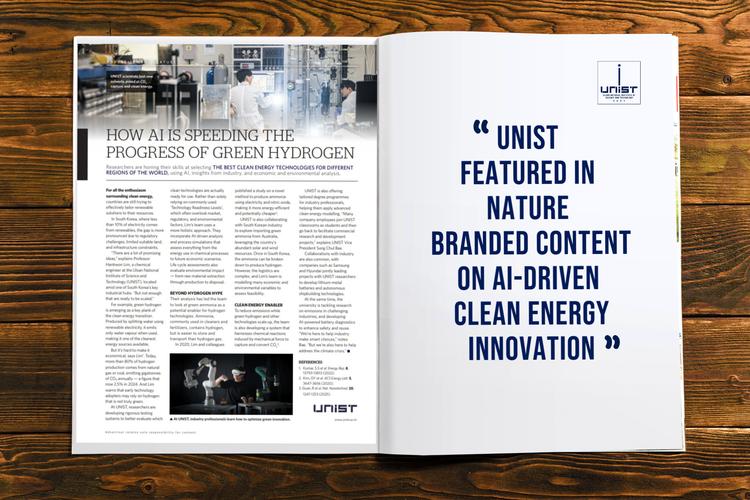
UNIST Featured in Nature Branded Content on AI-Driven Clean Energy Innovation

UNIST is featured in a branded content article published on Nature, in collaboration with Springer Nature, highlighting its research strengths in green hydrogen, AI-driven energy modeling, and industry-based innovation. Titled "How AI Is Speeding the Process of Green Hydrogen," the article explores how UNIST researchers are applying AI, economic modeling, and real-world data to accelerate the deployment of scalable clean-energy technologies. At the core of the article is the work of Professor Hankwon Lim from the UNIST Graduate School of Carbon Neutrality, whose team evaluates clean-energy pathways from a holistic perspective. Moving beyond traditional 'Technology Readiness Levels,' which often overlook market, regulatory, and environmental dimensions, his group integrates AI simulations, process and energy modeling, and life-cycle analysis to assess which solutions—such as green hydrogen or green ammonia—are most viable for large-scale, region-specific adoption. The article also highlights UNIST's collaboration with industry to advance practical clean-energy solutions. Current initiatives include modeling supply chains for importing and converting green ammonia, developing mechanochemistry-based systems for CO₂ capture, and conducting joint research with partners such as Samsung and Hyundai. In addition, the feature introduces UNIST’s tailored degree programs designed for industry professionals, supporting companies in applying advanced energy modeling to real-world R&D challenges. "Many company employees join UNIST classrooms as students and return to industry ready to lead innovation," said UNIST Vice President Sung Chul Bae, emphasizing UNIST's role in supporting Korea's industrial transition. This collaboration with Springer Nature reflects UNIST's broader commitment to driving a sustainable energy future through research excellence, technology validation, and strong industry partnerships. 《Editor’s Note: Portions of this article are adapted from the branded content article "How AI Is Speeding the Progress of Green Hydrogen," published on Nature in collaboration with Springer Nature on December 11, 2025.》 Explore the full branded content article on Nature to learn more about UNIST's work at the forefront of clean-energy innovation.

원자력공학과, ‘원자력 안전규제라운드테이블’ 개최

Research 2025년 12월 09일 화요일

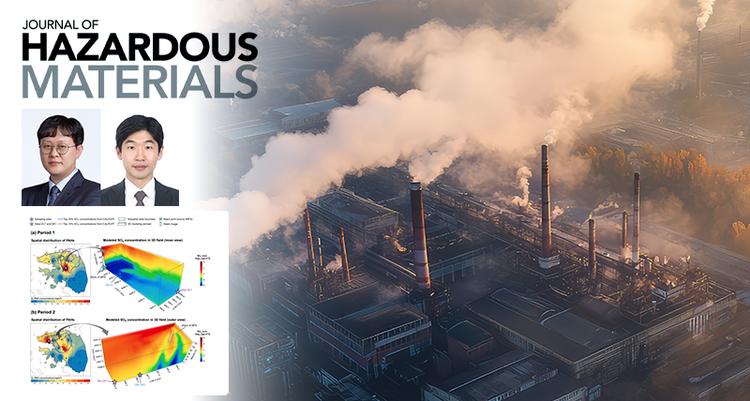
UNIST Unveils Integrated Framework to Better Assess Air Pollution Health Risks

Abstract In industrial cities, identifying sources and assessing the risks of hazardous air pollutants are critical for protecting public health. This study employed passive air samplers (PASs) to analyze 13 PAHs at 15 sites in Daesan, a petrochemical industrial city in South Korea, during the warm season. The mean Σ13 PAH concentration was 8.1 ± 6.2 ng/m3, comparable to levels observed in other industrial cities. Elevated PAH concentrations and cancer risks were observed in the industrial and central areas of Daesan, primarily influenced by emissions from industrial stacks, as confirmed by 3D air dispersion modeling. Although the lifetime cancer risk of PAHs (2.11 × 10−10–3.41 × 10−7) remained within the US EPA’s acceptable range, cancer risk maps highlighted a strong association between industrial emissions and cancer risk, especially for high-percentile exposure groups. This study highlights the combined effects of local industrial and vehicle emissions on air quality and cancer risk. Our findings demonstrate that integrating PASs with 3D dispersion modeling and percentile-based risk assessment provides a novel framework for identifying residential exposure and major emission sources. This approach effectively reveals elevated risks for vulnerable subpopulations, often hidden in conventional average-risk estimates, providing a valuable basis for future health impact assessments. A research team, affiliated with UNIST unveiled an integrated air pollution analysis framework that enables more precise assessment of exposure risks from carcinogenic air pollutants commonly emitted from industrial complexes. The approach is expected to help identify exposure “blind spots” often overlooked by conventional assessments and provide a scientific basis for strengthening environmental management policies in industrial areas. Led by Professor Sung-Deuk Choi of the Department of Civil, Urban, Earth, and Environmental Engineering at UNIST, the research team combined passive air sampling (PAS), three-dimensional air dispersion modeling, and probabilistic health risk assessment into a single analytical framework. Passive air samplers (PASs) collect airborne pollutants by allowing them to naturally adsorb onto porous, sponge-like media. Because the method is cost-effective and easy to deploy, samplers can be installed across wide areas to generate high-resolution spatial maps of air pollution. However, PAS data alone provide limited insight into where pollutants originate or how they travel through the atmosphere. Figure 1. Spatial distribution of the measured Σ13 PAH concentrations and the boundaries representing the top 25 % and 10 % of the modeled SOX contributions from point sources during (a) period 1 (May 26–June 23) and (b) period 2 (June 23–July 21). To address this limitation, the researchers integrated 3D dispersion modeling, which simulates how emissions released from industrial stacks spread and move under varying wind conditions. This modeling approach makes it possible to track how pollutants rise, disperse, and descend over distances of several kilometers, depending on factors such as stack height and prevailing wind direction—offering a clearer picture of how industrial emissions affect surrounding residential areas. The team further applied probabilistic risk assessment to better capture exposure risks among high-exposure groups that may be masked by average-based evaluations. Traditional risk assessments often rely on fixed assumptions—such as average outdoor activity time—whereas probabilistic methods treat behavioral and environmental variables as probability distributions. This allows researchers to estimate cancer risks for higher-percentile exposure groups, including individuals who may experience prolonged outdoor exposure on days with elevated pollution levels. "By moving beyond average values, this framework helps uncover hidden health risks in residential areas near industrial complexes," said Professor Choi. "Our findings provide scientific evidence that can inform policies such as optimizing stack heights, managing emission pathways, and establishing buffer zones to better protect public health." First author Dr. Sang-Jin Lee added that the framework is not limited to polycyclic aromatic hydrocarbons (PAHs). "This integrated approach can also be applied to other hazardous air pollutants, including volatile organic compounds (VOCs), persistent organic pollutants (POPs), and heavy metals, to better understand their transport patterns and exposure characteristics," he said. The findings of this research were published online in the Journal of Hazardous Materials on November 14, 2025. This study was supported by a grant from the National Institute of Environmental Research (NIER), funded by the Korean Ministry of Environment. Additional support was provided by the National Research Foundation, funded by the Korean Ministry of Education. Journal Reference Sang-Jin Lee, Ho-Young Lee, Seong-Joon Kim, et al., "Pollution characteristics and cancer risk of PAHs in a petrochemical industrial city: Insights from passive air sampling and three-dimensional dispersion modeling," J. Hazard. Mater., (2025).

원자력공학과, ‘원자력 안전규제라운드테이블’ 개최

Research 2025년 11월 07일 금요일

Revolutionary Recycling Technology Extracts 99% Purity of Nickel and Cobalt from Waste Batteries

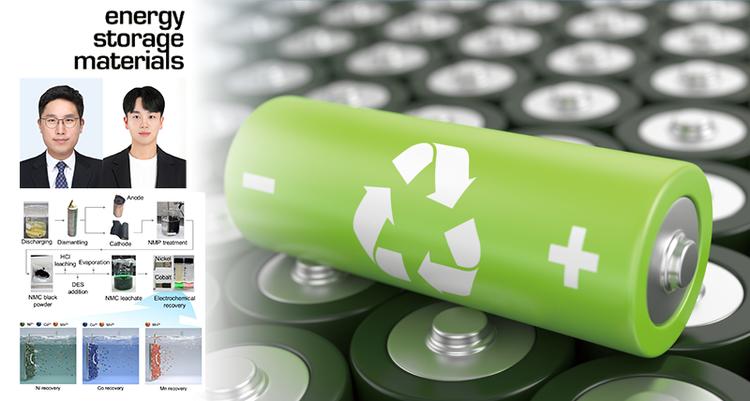
Abstract Electrochemical recovery presents a sustainable route for battery recycling, yet it is hindered by a trade-off between achieving purity and yield. This challenge arises because, as the target metal depletes during electrodeposition, mass transport limitations reduce its availability, thereby shifting the electrochemical environment in favor of co-deposition of competing metal – particularly during prolonged deposition intended for near-complete recovery. Here, we report a strategy that leverages a multifunctional deep eutectic solvent (DES), ethaline, where ethylene glycol preferentially coordinates with nickel while chloride stabilizes cobalt as tetrachlorocobaltate complexes. Even at elevated temperatures, where nickel undergoes a partial thermochromic transition to chloride coordination, the system maintains a broadened Ni–Co separation window of ∼0.3 V at 85 °C. By fine-tuning the applied potential and utilizing the intrinsic chlorine redox activity of the DES, self-purification was achieved during electrodeposition, yielding a Ni/Co separation factor >3000 and >97 % nickel recovery in a single-step electrodeposition from a synthetic Ni/Co mixture. Building upon this binary separation, we developed a sequential strategy to recover nickel, cobalt, and manganese from real battery leachates. Applied to real NMC leachates, our process enabled the sequential recovery of nickel, cobalt, and manganese with purities of 99.1 %/96.3 % (NMC111) and 99.2 %/98.8 % (NMC811) for nickel and cobalt, respectively, all with >95 % recovery. For NMC111, >97 % nickel purity and >93 % cobalt purity were retained over repeated reuse of the DES, enabling minimal wastewater discharge, with Cl2-assisted refining enhancing purity to >99.9 %. A technoeconomic analysis validated the economic feasibility and revealed further potential through thermal optimization. A research team, affiliated with UNIST has unveiled an innovative recycling technology, capable of recovering over 95% of nickel and cobalt from waste batteries with a purity exceeding 99%. This advanced method addresses the limitations of conventional wet recycling processes, which often involve complex chemical procedures and generate large volumes of harmful wastewater. The new approach promises a more sustainable, high-efficiency solution that could transform the battery recycling industry. Professor Kwiyong Kim and his research team from the Department of Civil, Urban, and Earth Environmental Engineering successfully demonstrated a selective electrochemical separation process utilizing a multifunctional special solvent. This breakthrough enables efficient recovery of nickel and cobalt from spent batteries through a single, environmentally friendly step. Waste batteries are often called 'Urban Mines' due to their abundance of critical metals, such as nickel, cobalt, and manganese. However, the coexistence of multiple metals makes their separation challenging. Conventional methods rely on strong acids, like sulfuric acid and chemical extractants, which produce hazardous wastewater and involve multi-stage, energy-intensive processes. The new electrochemical process minimizes chemical usage and wastewater production while enhancing both purity and recovery efficiency. By applying a controlled voltage to a liquid mixture containing crushed battery material, metal ions are selectively deposited as solid metals. This technique leverages the different voltages at which each metal ion reduces, enabling precise separation. Specifically, the team overcame the common challenge of simultaneous co-deposition of nickel and cobalt—usually occurring at similar voltages—by employing a specialized co-solvent. Ethylene glycol in the solvent preferentially binds with nickel ions, while chloride ions stabilize cobalt as tetrachlorocobaltate complexes. This differential coordination shifts the reduction voltages, allowing nickel to be deposited at –0.45 V and cobalt at –0.9 V, effectively separating the two metals. Figure 1. Schematic representation illustrating the key findings of the study. An added advantage of this process is the natural formation of chlorine by-products, which selectively dissolve cobalt impurities. This in-situ self-purification enhances the purity of recovered nickel without the need for additional refining steps. The chlorine-containing solution can be safely vented, as it forms inert ions, and the solvent’s hydrochloric acid content can be regenerated and reused, minimizing environmental impact. When applied to real NCM (Nickel-Cobalt-Manganese) battery leachates, the process achieved recovery rates exceeding 95%, with separation purity surpassing 99.9% for both nickel and cobalt. Notably, the special solvent maintained performance over at least four reuse cycles, further reducing waste. Professor Kim stated, "By overcoming the long-standing trade-off between purity and recovery rate in electrochemical separation, our method offers a sustainable and cost-effective solution. It minimizes chemical use and wastewater, contributing to a more sustainable battery recycling ecosystem." The findings of this research have been published in the October 2025 issue of Energy Storage Materials and supported by the Ministry of Education, the National Research Foundation of Korea, and UNIST. Journal Reference Seongmin Choi, Kenta Motobayashi, Kwiyong Kim, et al., "Highly selective and near-complete electrochemical recovery of cobalt and nickel from spent batteries through multifunctional deep eutectic solvent," Energy Storage Mater., (2025).

원자력공학과, ‘원자력 안전규제라운드테이블’ 개최

Research 2025년 10월 28일 화요일

Study Reveals Contrasting Optical Properties of Fine Particulate Matter in Seoul and Mexico City, Highlighting Climate Impacts

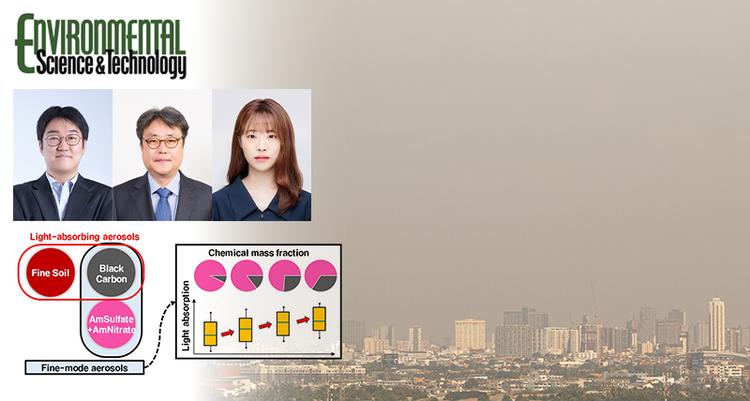
Abstract Using the Surface Particulate Matter Network (SPARTAN) and Aerosol Robotic Network (AERONET), we investigated the relationship between aerosol chemical composition and optical properties across 14 global sites. The mass concentrations of ammonium sulfate (AS), ammonium nitrate (AN), fine soil (FS), and black carbon (BC) from SPARTAN were collocated with aerosol optical properties (aerosol optical depth (AOD), fine mode fraction (FMF), and single scattering albedo (SSA)) from AERONET. Significant differences in the optical properties of samples from 2016 to 2023 were identified based on the mass and mass ratios of the chemical components. For the BC–FS relationship in the data set used in this study, increased FS mass lowered FMF and dSSABC–FS (SSA440–SSA870) by approximately 0.033 and 0.005 per 1 μg/m3, respectively. Higher ratios of nonabsorbing components (AS and AN) to BC (w = (AS + AN)/(AS + AN + BC)) increased SSA at all wavelengths. The correlation between w and SSA was stronger at longer wavelengths, with SSA440 and SSA1020 increasing by approximately 0.026 and 0.046 per 10% increase in w from the data set, respectivley. Site-specific results showed that dSSAw and rSSA (SSA440/SSA1020) increased as the BC proportion rose (w decreased). This study emphasizes the utility of both dSSA and rSSA, alongside single-wavelength SSA, in understanding aerosol behavior. Integrating columnar optical data with surface-level chemical measurements, the combined SPARTAN and AERONET approach offers valuable insight into aerosol classification, behavior, and atmospheric impacts. Severe fine dust pollution over Seoul and Mexico City, being composed of the same type of fine particulate matter (PM2.5), exhibits markedly different characteristics. Seoul's air tends to reflect sunlight, contributing to a cooling effect on the Earth, whereas Mexico City's particles are more inclined to absorb sunlight, potentially accelerating global warming. A research team led by Professor Sang Seo Park from the Department of Civil, Urban, Earth and Environmental Engineering at UNIST analyzed chemical samples and optical data of PM2.5 collected from 14 cities around the world. Their findings reveal notable differences in the optical and chemical characteristics of fine particles in these two urban environments. According to the study, Seoul's fine particulate matter has a high proportion of sulfate and nitrate compounds, which tend to strongly scatter sunlight, exhibiting a 'reflective (albedo)' nature. In contrast, Mexico City has a relatively higher presence of black carbon—soot—that absorbs sunlight, displaying an 'absorptive' property. This means that, even with the same PM2.5 levels, Seoul's particles reflect sunlight back into space, exerting a cooling influence, while particles in Mexico City absorb solar energy, potentially accelerating local warming. Figure 1. Pie charts of the mass ratios of fine particles (AS, AN, and BC) and boxplots of their corresponding (a) dSSAw (SSA440–SSA870), (b) rSSA (SSA440/SSA1020), (c) SSA440, and (d) SSA870 values. The research compared chemical composition data (SPARTAN) and optical measurements (AERONET)—a ground-based network that assesses how sunlight is scattered and absorbed as it passes through the atmosphere—from 14 cities worldwide, including Seoul, Beijing, and Mexico City. AERONET data enables estimation of particulate matter concentration based on how much sunlight is dimmed and scattered by atmospheric aerosols. Results indicated that a higher ratio of scattering components, such as sulfate and nitrate, correlates with increased Single Scattering Albedo (SSA) values. SSA quantifies the proportion of light reflected versus absorbed by airborne particles; values approaching 1 signify predominantly scattering particles, while lower values indicate higher absorption. The study found that as the number of absorbing components like black carbon increased, SSA decreased, especially at longer wavelengths (870–1020 nm). Additionally, larger amounts of soil dust led to rapid changes in wavelength-dependent scattering properties (dSSA and rSSA). Sujin Eom, the first author of the study, explained, "This research demonstrates, through direct measurements rather than modeling, how differences in chemical composition influence the optical behavior and climate effects of aerosols. It highlights the importance of considering not just PM2.5 concentrations but also their composition in air quality and climate studies." Professor Park added, "Our findings establish a basis for indirectly estimating the toxicity differences of fine particles based on their optical properties. This approach can enhance the accuracy of air quality forecasts and inform public health policies." This joint research was conducted in collaboration with the UNIST Particle Pollution Research and Management Center and published in the journal, Environmental Science & Technology (Impact Factor=11.3) on September 12, 2025. Journal Reference Sujin Eom, Sang Seo Park, Xuan Liu, et al., "Impact of Chemical Composition on Aerosol Scattering: Insights from the Surface Particulate Matter Network and Aerosol Robotic Network," Environ. Sci. Technol., (2025).

원자력공학과, ‘원자력 안전규제라운드테이블’ 개최

Research 2025년 10월 21일 화요일

Innovative AI Technology Enables Rapid, Cost-Effective Inspection of Nuclear Power Plant Equipment Using Single Seismic Sensor

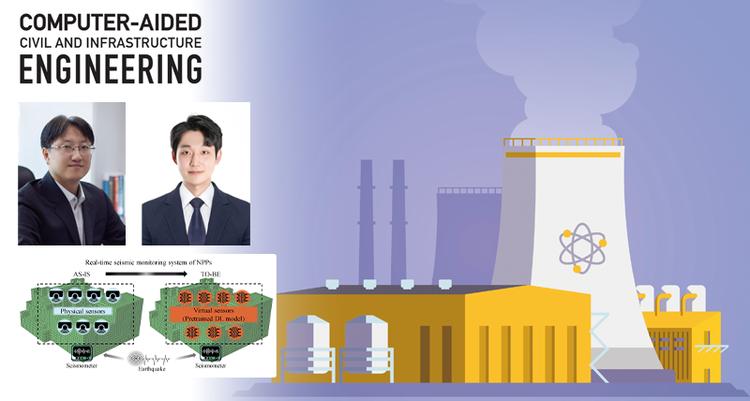
Abstract Critical equipment in nuclear power plant auxiliary buildings such as control cabinets, panels, transformers, and diesel generators often malfunction before structural damage occurs, demanding rapid post-earthquake inspection prioritization. However, direct walkdown inspection or dense sensor networks are impractical due to restricted accessibility in radiological zones and the high costs associated with maintenance. To address this, we propose a residual convolutional network-based virtual sensing framework that supports urgent inspection prioritization by predicting acceleration at 139 locations from a single high-quality seismometer. The model employs six residual blocks with progressively downsized kernels to capture multi-scale features, while skip connections prevent vanishing gradients. Trained on artificial earthquakes with 10 dB noise and validated against unseen Next Generation Attenuation-West 2 ground motions matched to Nuclear Regulatory Commission Regulatory Guide 1.60 and Korean uniform-hazard spectra, the model achieves a maximum mean absolute percentage error of 0.44%–0.59% for noise-free case and ≤4.23% at 10 dB, demonstrating robust generalization. The resulting rapid, noise-tolerant virtual sensor network enables actionable equipment-level decision making in nuclear facilities at a fraction of conventional monitoring cost. Electrical equipment housed within auxiliary buildings of nuclear power plants—such as control panels, transformers, and emergency generators—are particularly vulnerable to vibrations. Notably, during the 2016 Gyeongju earthquake, while concrete structures remained intact, power facilities had to be shut down for safety inspections. Now, a new technology allows for quick identification of equipment requiring maintenance without the need for extensive manual inspections. Researchers from the Department of Civil, Urban, Earth, and Environmental Engineering at UNIST, led by Professor Young-Joo Lee, in collaboration with Dr. Jaebeom Lee from the Division of Physical Metrology at the Korea Research Institute of Standards and Science, announced the development of an advanced artificial intelligence (AI) model capable of estimating seismic responses at 139 detailed points within auxiliary buildings of nuclear power plants. Figure 1. Overview of the virtualizing scheme of physical sensors in nuclear power plants [NPPs]. This AI model can analyze seismic data captured by a single high-quality sensor and, within 0.07 seconds, predict the acceleration response at 139 locations inside the building. These acceleration responses indicate how strongly and quickly equipment is shaken during an earthquake, helping prioritize which areas and devices require urgent inspection. While installing hundreds of sensors would be necessary for direct measurement, this AI acts as a virtual sensor, accurately estimating responses across multiple points without physical sensors. This significantly reduces maintenance costs and minimizes disruptions to plant operations. The research team designed the AI with six residual convolutional blocks, enabling it to learn a wide range of vibration patterns—from slow ground motions to rapid tremors. As a result, the model can precisely estimate both large-scale movements of the entire structure and amplified vibrations near critical equipment. In tests without noise, the model's prediction errors were as low as 0.44–0.59%. Even under artificially induced noise at 10dB, it maintained a low error rate of around 4%. Validation against real earthquake records (NGA-West 2 dataset) confirmed the model’s reliability, even under seismic conditions set by safety standards used in Korea and the United States for nuclear facilities. Professor Young-Joo Lee commented, "This technology drastically reduces inspection time, operational downtime, and maintenance costs for nuclear plants. Particularly in radiation-controlled zones where sensor installation and upkeep are highly restricted and expensive, this solution offers a fundamental improvement." The significance of this breakthrough has been recognized internationally. First author Jingoo Lee received an honorable mention for the Shitaba Early Career Award at the 28th International Conference on Structural Mechanics in Reactor Technology (SMiRT28), held in Toronto, Canada, from August 10 to 15, 2025. SMiRT is a leading global conference specializing in reactor structural integrity and seismic safety. The research findings were published in Computer-Aided Civil and Infrastructure Engineering on September 9, 2025. This project was supported by the National Research Foundation of Korea (NRF), funded by the Ministry of Science and ICT (MSIT). Journal Reference Jingoo Lee, Seungjun Lee, Young-Joo Lee, and Jaebeom Lee, "Virtual sensing of seismic floor responses for rapid prioritization of critical equipment inspection in nuclear power plants," Comput.‐Aided Civ. Inf., (2025).

원자력공학과, ‘원자력 안전규제라운드테이블’ 개최

Research 2025년 09월 26일 금요일

Finer-Scale Monitoring of Ammonia Emissions That Contribute to Fine Particulate Matter

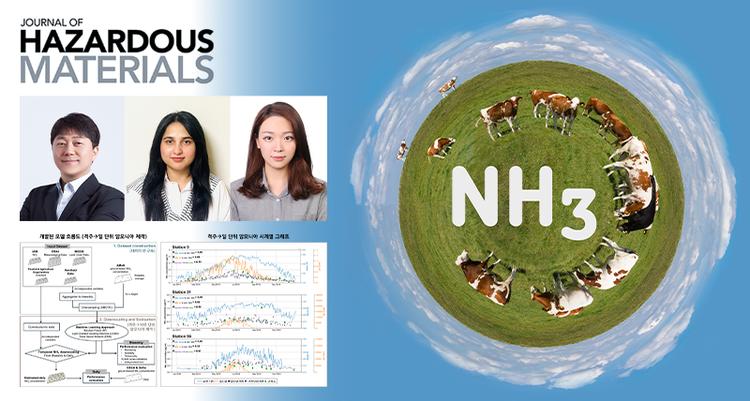
Abstract Ammonia (NH3) is a gaseous pollutant with significant environmental and health implications. Over recent decades, its increasing concentrations, driven by industrialization and agriculture, have necessitated high-resolution monitoring. However, limited daily ground-based observations hinder comprehensive analysis. This study developed machine learning-based frameworks—deep neural network (DNN), random forest, and light gradient boosting machine—to predict biweekly NH3 concentrations and downscale them to daily estimates across the United States during 2017–2022. The models integrate NH3 column concentrations, meteorological variables, land cover data, livestock information, and ground-based measurements. Among the models, DNN showed superior performance in both spatial cross-validation and independent testing, achieving a correlation coefficient of 0.79, a root mean square error of 0.98 µg/m³ , and an index of agreement of 0.83— effectively capturing fine-scale spatial variations at a 9 km resolution. Shapley additive explanations analysis identified temporal dynamic factors—such as day of year and meteorological variables—as key predictors, along with land cover and cattle density, highlighting the model’s ability to support the temporal downscaling of NH3 from biweekly to daily scale. When applied to the UK, the model demonstrated its potential for spatial transferability via the leave-one station-out and leave-one year-out cross validations. These findings highlight the ability of machine learning in bridging temporal gaps and generating high-resolution daily NH3 estimates. A novel artificial intelligence (AI) technology now makes it possible to monitor ammonia (NH₃)—a key contributor to harmful fine dust particles—with unprecedented precision and spatial detail, addressing longstanding gaps in current observation methods. Led by Professor Jungho Im in the Department of Civil, Urban, Earth, and Environmental Engineering at UNIST, the research team has successfully developed an AI model capable of estimating daily atmospheric ammonia concentrations with high accuracy. Ammonia is emitted from various sources, including agricultural fertilizers, livestock waste, and fire incidents. While relatively harmless on its own, ammonia reacts with atmospheric sulfuric and nitric acids to form fine particulate matter (PM2.5), which poses serious health and environmental risks. Precise monitoring of ammonia levels is thus vital for accurate air quality forecasts and effective policymaking. However, due to ammonia’s short atmospheric lifespan and the limited number of ground-based monitoring stations, existing data are typically restricted to biweekly intervals. Climate models that estimate ammonia over large regions often suffer from significant regional inaccuracies, limiting their usefulness for localized air quality management. To overcome these challenges, the team developed an advanced deep neural network-based AI model that enhances both the temporal frequency and spatial resolution of ammonia monitoring. By integrating climate data from the European Centre for Medium-Range Weather Forecasts (ERA5), satellite-derived ammonia column measurements from the IASI instrument, and ground-based observations from the U.S. Ammonia Monitoring Network (AMoN), the model effectively downscales biweekly data into high-resolution daily estimates. The AI model demonstrated outstanding performance, reducing prediction errors by up to 1.8 times compared to the European Monitoring and Evaluation Programme (CAMS) climate model. Notably, although trained primarily on U.S. data, the model successfully identified high-amplitude pollution events, such as the widespread fire in Manchester, UK, in 2019—highlighting its strong potential for broader spatial application and real-world deployment. This research was led by first authors Saman Malik and Eunjin Kang. Professor Im emphasized that, unlike traditional climate models like CAMS or sparse ground stations, this AI approach can deliver continuous, high-resolution ammonia monitoring. "This technology can significantly improve air quality forecasts related to nitrogen-based pollutants and support more effective environmental policies," he stated. He further added, "Applying this model domestically could enable real-time, high-resolution monitoring of ammonia concentrations across the country, marking a crucial step toward more precise air quality management and public health protection." The study was published in the esteemed journal Journal of Hazardous Materials (Impact Factor = 11.3) on September 15, 2025. Funding support was provided by the Korea Environment Industry & Technology Institute (KEITI) and the National Research Foundation of Korea (NRF), under the Ministry of Environment (ME) and the Ministry of Science and ICT (MSIT). Journal Reference Saman Malik, Eunjin Kang, Yoojin Kang, et al., "Bridging temporal gaps: AI-based temporal downscaling of biweekly NH3 to daily scale with spatial transferability," J. Hazard. Mater., (2025).

원자력공학과, ‘원자력 안전규제라운드테이블’ 개최

Community 2025년 07월 15일 화요일

Feces Standard Money (fSM): A New Economic Paradigm—From Waste to Worth!

A groundbreaking new book that explores an innovative economic paradigm utilizing human waste as a resource has been published. Professor Jaeweon Cho of the Department of Civil, Urban, Earth, and Environmental Engineering at UNIST has released his latest work, "Feces Standard Money (fSM): A New Economic Paradigm—From Waste to Worth!" This book introduces a novel economic model that reexamines the interactions between humans and nature in the digital age, drawing on a multidisciplinary project supported by the Science Walden Center initiative, encompassing science, arts, and humanities. At the core of the book is a radical shift in thinking: transforming human waste into an economic resource. Professor Cho elaborates on the concepts of value creation and rewards through the utilization of waste, exploring the social viability of fSM. The book details experiments conducted between 2019 and 2021 in the Guyoung-ri area of Ulsan and on the UNIST campus, investigating how such a system could be practically implemented in society. The fSM operates by rewarding individuals with digital tokens for contributions—such as energy generation, water conservation, and fertilizer production—that originate from human waste. This system extends beyond traditional local currency concepts and opens up possibilities for establishing a basic income model free from taxation. It also has the potential to generate social value by supporting funds for reunification, aid for war orphans, and other societal initiatives. Part one emphasizes that human waste should not be viewed solely as refuse but as a vital resource embodying the interaction between humans and nature. It scientifically and rationally analyzes the economic and social values of waste, illustrating how human dignity can be restored even amid despair. Part two delves into case studies of waste being used as energy and fertilizer, alongside an in-depth discussion of experiments with fSM. The book explores the potential realization of basic income and economic democracy through this innovative approach. "This book presents a forward-looking economic vision tailored for the digital and quantum computing era," said Professor Cho. "It aims to promote increased interaction between humans and nature, inspiring societal change through active public participation and fostering social miracles."

u
  • 등록된 글이 없습니다.

지구환경도시건설과의 다양한 소식
을 전달드립니다.

지구환경도시건설과에서 진행중인
세미나 입니다.

지구환경도시건설공학과 학사일정
확인해 보세요.

View More